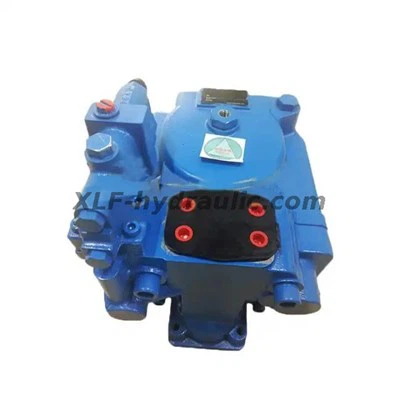
If you've ever worked on heavy machinery - think wheel loaders, excavators, or articulated haulers - you've probably relied on hydraulic pumps to get jobs done. As a A8VO pump supplier, I get asked all the time: "What makes these pumps so reliable, and how do they actually work?" Let me break it down in plain terms, no jargon overload, so you can understand why this pump is a workhorse in so many industrial applications.
First, let's start with the basics: the A8VO is a variable axial piston pump. Unlike fixed-displacement pumps that push a set amount of fluid no matter what, variable pumps adjust their output to match what the machine needs. That's a big deal for efficiency - less wasted energy means lower operating costs, and that's something every fleet manager or equipment operator cares about.
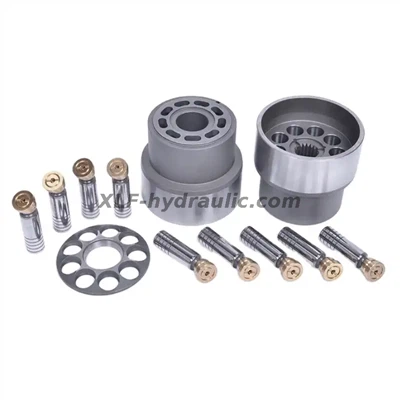
At the heart of the A8VO is the swash plate, sometimes called the angle plate. This isn't just a random part - it's the control center for how much fluid the pump moves. The pistons (usually 9 or 10 per pump, depending on the size) sit in a rotating cylinder block, and each piston has a shoe that rides against the swash plate. When the drive shaft spins the cylinder block, the pistons move in and out of their bores because of the angle of the swash plate. If the swash plate is tilted at a steep angle, the pistons move further in and out, pulling more fluid into the pump's inlet and pushing it out the outlet. Tilt it less, and the output drops. That's how the pump adjusts its flow on the fly.
But how does the swash plate know when to tilt? That's where the control system comes in, and this is where the A8VO stands out. It uses a combination of hydraulic and electronic controls (depending on the model) to adjust the swash plate angle based on load requirements. For example, if your wheel loader is lifting a heavy load, the control system will increase the swash plate angle to push more fluid to the cylinders, giving you the power you need. When you're just moving the bucket empty, it reduces the angle to save energy. This dynamic adjustment is a huge reason why the A8VO is more efficient than older fixed-displacement pumps.
Now, let's talk about the components that make this all work together. The drive shaft connects the pump to the machine's engine, turning at a constant speed (usually 1,500 to 3,000 RPM, depending on the application). The cylinder block rotates on a bearing that's aligned with the drive shaft, so when the shaft spins, the block spins with it. The pistons are spring-loaded to keep their shoes pressed against the swash plate, so they always follow the angle. The valve plate, mounted on the end of the cylinder block, has two ports: inlet (suction) and outlet (pressure). As each piston rotates past the inlet port, it pulls hydraulic fluid into the bore, and as it rotates past the outlet port, it pushes that fluid out under high pressure. This happens with every piston, so the pump delivers a steady flow of pressurized fluid to power the machine's hydraulics.
One thing I always tell customers is that the A8VO is built for tough conditions - that's why it's used in everything from construction equipment to marine machinery. It has a robust design, with heavy-duty bearings and wear-resistant parts that handle high pressures (up to 450 bar in many models) without failing. That reliability is why you'll see it paired with other quality hydraulic parts, like the CAT Hydraulic Variable Plunger Pump 118-1143 9T-6859 Series for Wheel Loaders for complementary systems.
Wait, let's circle back to the control system because it's what makes the A8VO different from other axial piston pumps. Some basic variable pumps use a hydrostatic control, which uses hydraulic pressure from the pump itself to adjust the swash plate. But takes it a step further with electronic control options, like the electro-hydraulic (EH) version. This lets the pump communicate with the machine's ECU (engine control unit) to adjust flow based on real-time data - like engine speed, load, and operator input. For example, if the machine's sensors detect that the hydraulic system is under heavy load, the EH control will tilt the swash plate to maximum angle almost instantly, so you get the power you need when you need it. If load decreases, it reduces flow to save fuel. That level of precision is hard to find in pumps from other brands, like the Parker Denison T6C Single Micro Axial Piston Pump for Industrial Machinery, which is great for smaller applications but doesn't offer the same dynamic control as the A8VO.
Another key feature of the A8VO is its ability to handle both open-loop and closed-loop circuits. Open-loop is the most common for construction equipment, where the fluid goes from the pump to the actuators (cylinders, motors) and back to the tank. Closed-loop is used for things like drive motors on track loaders, where the fluid recirculates between the pump and motor without going back to the tank. The A8VO works seamlessly in both, which makes it super versatile. For closed-loop applications, it pairs perfectly with a hydraulic motor, like the 11116529 Danfoss Hydraulic Motor Fan Motor For Volvo Articulated Hauler, to power the machine's tracks or wheels.


Now, let's get into how this works in a real-world scenario. Say you're operating a Volvo articulated hauler that uses an A8VO pump. When you press the accelerator, the engine spins the pump's drive shaft, the cylinder block rotates, and the pistons move in and out of their bores. The control system detects that you want to move forward, so it adjusts the swash plate to direct more fluid to the drive motor. The motor converts the pressure of the fluid into rotational force, turning the wheels. When you load the hauler with dirt and need more power, the control system cranks up the pump's flow to handle the extra weight. When you're going downhill and don't need as much power, it reduces flow to save energy and reduce wear on the system. It's this adaptability that makes the A8VO such a staple in the industry.
As a supplier, I've seen firsthand how important proper maintenance is for keeping these pumps running. Even the best pump will fail if you don't use the right hydraulic fluid or change filters regularly. The A8VO is designed to handle clean, high-quality hydraulic fluid, and if you follow 's maintenance guidelines, it can last for tens of thousands of hours. I always advise customers to stick with genuine parts when replacing components, because aftermarket parts can throw off the precise tolerances that make the pump work correctly. For example, if you need a replacement pump for a bulldozer, swapping in a CAT 148 0825 Series Hydraulic Swash Plunger Hand Pump for Bulldozers might work for small jobs, but for heavy, high-hour applications, the A8VO is the way to go.
You might be wondering how the A8VO compares to other constant displacement pumps, like the CAT PVH Series Constant Displacement Hydraulic Pump for Excavators. Fixed displacement pumps are simpler and cheaper, but they waste a lot of energy because they push the same amount of fluid even when you don't need it. That means the engine has to work harder, burning more fuel, and the extra fluid has to go back to the tank through a relief valve, creating heat and wear. The A8VO eliminates that waste by only pushing the fluid you need, which translates to lower fuel costs and longer component life. For large fleets, that adds up to thousands of dollars in savings every year.
Let's talk about some common misconceptions I hear. Some people think variable axial piston pumps are too complicated or expensive, but the A8VO is actually designed to be easy to install and service. Most models have modular components, so if one part fails, you don't have to replace the whole pump. And while the initial cost is higher than a fixed displacement pump, the long-term savings in fuel, maintenance, and downtime make it a better investment for heavy-duty applications.
So, putting it all together, the working principle of the A8VO pump boils down to this: a rotating cylinder block with pistons, a swash plate that adjusts to change flow, and a control system that fine-tunes the swash plate angle based on real-time load and power needs. It's efficient, reliable, versatile, and built to handle the toughest jobs in construction, agriculture, material handling, and more.
If you're in the market for a A8VO pump, whether for replacement, an upgrade, or new equipment, I'm here to help. We stock a full range of A8VO models, plus all the compatible hydraulic parts you need to keep your machinery running smoothly. Whether you have questions about sizing, installation, or maintenance, feel free to reach out to our team to discuss your specific application. We can help you find the right A8VO pump for your needs and make sure you get the support you need to keep your equipment operating at peak performance.
References
- Bosch . (n.d.). A8VO Variable Axial Piston Pump Technical Manual.
- Hydraulics & Pneumatics. (2022). "Variable Pumps: The Key to Hydraulic Efficiency."
- Parker Hannifin. (n.d.). T6C Single Hydraulic Pump Product Specification.
- Danfoss Power Solutions. (n.d.). 11116529 Fan Motor Datasheet.
- Caterpillar. (n.d.). Hydraulic Pump Application Guides for Construction Equipment.