If you've ever stood on the deck of a heavy-duty excavator, a tractor hauling a full load, or a wheel loader maneuvering tight construction site spaces, you've likely relied on a propeller vane-even if you didn't notice it. These small, precision-crafted components are the unsung workhorses of hydraulic systems, responsible for transferring fluid pressure to power everything from arm booms to bucket controls. As a propeller vane supplier, I've learned that a single flawed vane can derail an entire piece of equipment, leading to costly downtime, safety risks, and unhappy customers. That's why quality control isn't just a buzzword for our team-it's the backbone of every vane that leaves our facility.
Let's break down exactly what quality control for propeller vane manufacturing looks like, step by step, because cutting corners at any stage can turn a reliable part into a failure waiting to happen.
Raw Material Inspection: The First Line of Defense
We start with raw materials, because a vane is only as strong as the metal it's made from. Most propeller vanes for industrial hydraulic applications are forged from high-grade aluminum alloy, cast iron, or sometimes stainless steel for heavy-duty use like in large excavators. Before we even begin machining, every batch of material goes through rigorous testing. We check for consistent chemical composition using a metal analyzer, verifying that it meets industry standards for hardness, tensile strength, and corrosion resistance. No material enters our production floor without a material test report (MTR) to back it up.
This initial step is critical because vanes operate at high speeds and under extreme pressure-think thousands of rotations per minute against hydraulic fluid that can reach 120°C (248°F). If the metal is too soft, it will wear down quickly; if it's too brittle, it could crack under stress. I once received a batch of subpar cast iron from a new supplier that had inconsistent hardness, and we caught it during raw material testing before a single vane was machined. That save cost us time with the supplier but saved our customers from premature vane failure down the line.


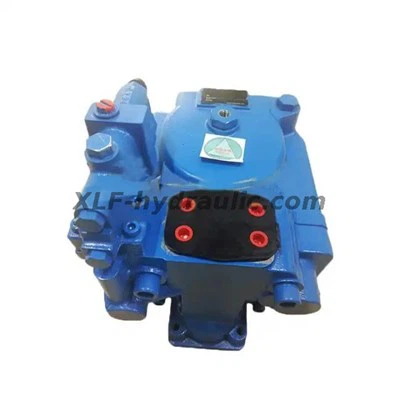
Speaking of hydraulic system components, our work with vanes is tied closely to the pumps that power them. For example, when manufacturing vanes for excavator hydraulic systems, we often partner with teams that source pumps like the Eaton Vickers Pvh131 PVH74 Series Inline Piston Pump for Excavators because these pumps are designed to work seamlessly with high-performance vanes. The pump and vane have to be calibrated perfectly to avoid turbulence, fluid leakage, and uneven wear-so ensuring both components meet strict standards is non-negotiable.
Machining Precision: Tolerances That Make or Break Performance
Once the material passes inspection, it moves to CNC machining, where the vane's shape, thickness, and surface finish are carved to exact specifications. Propeller vanes are thin, curved components with tight tolerances-often as small as 0.002 millimeters (about the width of a human hair). Even a 0.005mm deviation can cause the vane to rub against the pump housing, leading to friction, heat buildup, and reduced efficiency.
Our machining process uses 5-axis CNC machines that can produce complex, curved vane profiles with unmatched precision. After each machining run, we use coordinate measuring machines (CMMs) to scan every vane, comparing its dimensions to our CAD drawings. We also measure the surface finish using a profilometer-vanes need a smooth, polished surface to reduce friction with hydraulic fluid. A rough surface will cause more wear on the vane and the pump, so we reject any parts that don't meet our Ra (average roughness) requirement of 0.8 micrometers or lower.
This precision is especially important when working with specialized pumps, like the Parker C101 C102 Variable Speed Gear Pump for Crawler Excavator used in compact, high-power crawler equipment. The variable speed of these pumps means vanes have to handle fluctuating pressure and rotation speeds, so their thickness and curve have to be consistent across every batch. We've even adjusted our machining process slightly to align with the design specs of these pumps, ensuring our vanes deliver maximum performance without causing strain on the entire hydraulic system.
Heat Treatment: Balancing Hardness and Toughness
After machining, vanes go through heat treatment to enhance their mechanical properties. Most vanes are carburized or induction hardened to create a hard, wear-resistant outer layer while keeping the core of the metal tough enough to resist cracking under impact. If we overheat the vanes, they become too brittle and can break during operation; if we underheat them, they wear out too quickly.
We monitor every heat treatment run using thermal couples that track temperature and time, ensuring consistency across all parts. After heat treatment, we perform a hardness test on each vane-usually a Rockwell C hardness test, which measures the resistance of the material to indentation. Our target hardness is between 58 and 62 HRC, which strikes the perfect balance between wear resistance and toughness. We also do a nondestructive magnetic particle inspection to check for any hidden cracks or defects in the material that may have been introduced during heat treatment.
Heat treatment is where many smaller manufacturers cut corners, skipping rigorous monitoring to save time. We've seen vans from other suppliers that look identical to ours but wear out in half the time because their heat treatment was inconsistent. For heavy-duty applications, like parts for flat shovels, we even use specialized high-quality plungers alongside our vanes, such as the High Quality Eaton Vickers Ta1919 Hydraulic Pump Plunger for Flat Shovel, to ensure the entire hydraulic system works in harmony. The plungers and vanes have matching hardness and precision, so together they can handle the heavy loads of flat shovel operations without failure.
Surface Coating: Extra Protection for Harsh Environments
Many of our propeller vanes go through a surface coating process to protect against corrosion and further reduce friction. Common coatings include chrome plating, nickel-phosphorus plating, or polymer coatings, depending on the application. For parts used in outdoor or wet environments-like tractors exposed to rain and mud-we use thicker, corrosion-resistant coatings. For high-speed vanes, we use a low-friction coating to minimize energy loss and extend the life of both the vane and the pump.
After coating, we do a thickness test to ensure the coating is uniform and at the correct level. We also test for adhesion by scratching the coated surface to make sure it doesn't peel or flake off. This step is crucial because a damaged coating can lead to corrosion, which eats away at the vane and causes it to fail prematurely. We once had a customer return a batch of vanes that had corroded after a single season of use; upon inspection, we found their supplier had skipped the coating step entirely to cut costs. Since then, we've added a post-coating salt spray test to simulate harsh environmental conditions and ensure our coatings hold up.
Final Assembly and Function Testing: The Last Check Before Delivery
Before any vane leaves our facility, it goes through a final function test to make sure it works as intended in a real-world hydraulic system. We assemble test pumps using our vanes and run them under simulated operating conditions, measuring pressure, flow rate, and temperature. We check for leakage, noise, and vibration-any of these can indicate a flaw in the vane or a mismatch with the pump.
This step is where we validate that all our earlier quality control steps worked together. For example, when working with replacement parts for aftermarket tractor applications, like the CAT 6E2932 Replacement Fixed Speed Pump 936 Fits Aftermarket Tractor Part, we test our vanes in pumps compatible with this CAT part to ensure they meet the exact performance specs. The fixed speed of this pump means our vanes have to maintain consistent pressure at all times, so any small defect would show up in our function test.
We also keep detailed records of every test, so if a customer has an issue, we can trace it back to the manufacturing process. Transparency is key for our customers, who need to know they can rely on our parts in critical applications. Even for wheel loaders, which handle the toughest construction site loads, our vanes are tested to work with pumps like the CAT 148 3051 Hydraulic Pompa Piston Axial For Wheel Loaders, ensuring compatibility with the industry's leading equipment.
Beyond Manufacturing: Ongoing Quality and Customer Support
Quality control doesn't stop when the vanes ship. We work closely with our customers to gather feedback on how our vanes perform in their equipment, using that input to refine our processes further. For example, when a wheel loader customer reported slightly higher wear in dusty, high-debris environments, we adjusted our coating process to add an extra layer of protection against abrasive particles.
As a supplier, I know that trust is earned every time a customer's equipment runs smoothly because of a part we made. That's why we never cut corners, even when deadlines are tight. Every step-from raw material inspection to final function testing-is designed to deliver a vane that is precise, durable, and reliable.
If you're in the market for high-performance propeller vanes for your hydraulic systems, we'd love to discuss your needs. Whether you're working with excavators, crawler equipment, tractors, or wheel loaders, we can tailor our quality control process to meet your specific application requirements and ensure your equipment operates at its best. Reach out to our team to learn more about how our vanes can support your operations.
References
- Hydraulic Pump and Component Manufacturers Association. (2022). Industry Standards for Hydraulic System Components. Retrieved from hcpma.org/standards
- American Society for Metals. (2021). Metals Handbook: Volume 4: Heat Treating. Retrieved from asminternational.org/handbooks
- ISO 9001:2015. Quality Management Systems Requirements. International Organization for Standardization.
- Parker Hannifin Corporation. (2023). C101/C102 Variable Speed Gear Pump Technical Data Sheet. Retrieved from parker.com/hydraulics
- Eaton Corporation. (2023). PVH Series Inline Piston Pump Product Specifications. Retrieved from eaton.com/hydraulics