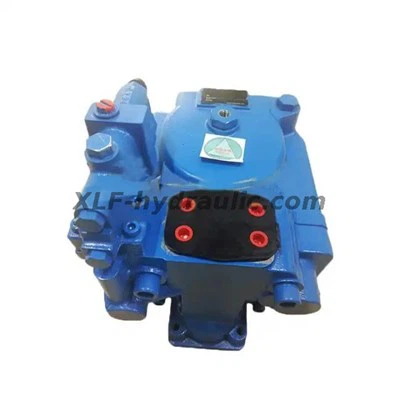
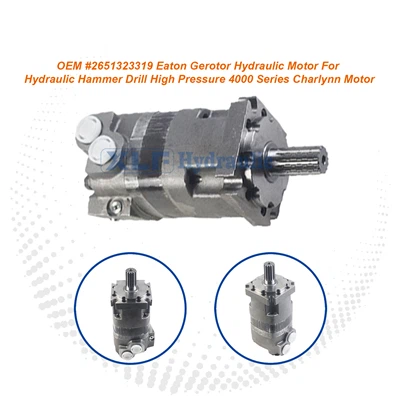
If you've ever stood next to a construction site, farm field, or mining operation as heavy equipment rumbles to life, you've watched axial piston pumps do the quiet, heavy lifting. These pumps are the heart of most hydraulic systems in off-road machinery, and their ability to withstand sudden, brutal shock is non-negotiable. As a supplier specializing in axial piston pumps, I've spent more years than I can count troubleshooting field failures, testing prototypes in our lab, and listening to equipment operators tell stories of the day a pump failed mid-job. One of the most common pain points I hear about is unexpected shock damage-damage that's not just costly, but can ground an entire job for days. Today, I want to break down exactly what shock resistance requirements for axial piston pumps really mean, how they vary across applications, and what you need to look for to avoid downtime.
First, let's get clear on what we mean by "shock" in the context of hydraulic pumps. This isn't just a rough vibration from a bumpy road, though that's a factor. Shock events are sudden, high-magnitude force spikes that hit the pump's internal components in milliseconds, not seconds. There are four main types of shock that axial piston pumps face in real-world use: pressure shock, mechanical shock, thermal shock, and transient shock from rapid system events.
Pressure shock is probably the most common and best understood. Think about a wheel loader arm that's holding a full bucket of gravel, then slamming down quickly to dump. When the valve shifts to redirect the fluid, the momentum of the moving load forces the fluid to stop almost instantly, creating a pressure spike that can be 5 to 10 times the pump's normal operating pressure. For example, a pump rated for 350 bar might see a shock spike of 1,750 to 3,500 bar in that split second. These spikes don't just strain the pump's housing-they can damage the swash plate, pistons, valve plate, and shaft seals. I saw this firsthand a few years back with a set of Rexroth A7VO Swash Plate Micro Piston Pump for Wheel Loaders, which our team supplied to a mid-sized construction company. Their equipment was operating on steep, uneven terrain where operators often dumped loads abruptly, and after three months, four pumps had failed due to cracked valve plates. That failure wasn't a flaw in the pump's design-it was a mismatch between the pump's shock rating and the application's peak pressure shocks.
Mechanical shock is another big culprit, especially in mobile equipment that travels over rough terrain. This type of shock comes from the pump being physically jolted when the machinery hits a pothole, rock, or uneven ground while running. The pump is mounted to the machinery's chassis or engine, so that jolt transmits directly to the pump's shaft, bearings, and internal pistons. For closed-circuit tandem pumps, like the Danfoss H1T Series Closed Circuit Tandem Hydraulic Pumps Full Models, which are often used in skid-steers and compact track loaders, mechanical shock can cause the pistons to misalign with the swash plate, leading to increased wear, reduced efficiency, and eventually, piston scuffing. We've tested these pumps in our lab by simulating a 10G (g-force) mechanical shock, and even within the pump's rated pressure, we saw a 12% drop in volumetric efficiency after just 50,000 shock cycles on unmodified units. That's a red flag for any application that sees regular rough terrain.
Thermal shock is less talked about but equally damaging. This happens when the pump is subjected to rapid changes in fluid temperature, like when a cold machine is started in subzero conditions and then put under full load immediately, or when a pump overheats after hours of heavy use and is suddenly cooled by cold fluid. For axial piston pumps, thermal shock causes different components to expand and contract at different rates-for example, the steel pistons expand faster than the cast iron valve plate. This differential expansion creates stress between parts, leading to micro-cracks in the valve plate or even the pump housing. We once worked with a farm equipment dealer who had a fleet of telehandlers running in the Canadian prairies, where temperatures swing from -20°C at startup to 35°C by midday. Their swash plate pumps kept failing at the valve plate, and after testing, we found the root cause was thermal shock. The Hydraulic Hydraulic Swash Plate Pump 122 1206 For CAT Telehandler 3054 Engine that they were using wasn't designed to handle the rapid temperature changes common in Northern climates. We helped them source pumps with engineered thermal expansion gaps between components, and failure rates dropped by 85%.
Transient shock from rapid system events is the fourth type, and it's often the most unpredictable. This happens when a hydraulic system has a sudden change in flow or direction, like when a relief valve opens unexpectedly, or a motor hits a hard stop. For variable pumps like the Parker PD Hydraulic Variable Vane Pump for Wheeled Tractor, which adjust their displacement to match load requirements, transient shock can come from the pump's own control system shifting too quickly. If the controller demands a 50% change in displacement in less than a second, the pistons and swash plate move faster than they're designed for, creating a shock that travels through the entire hydraulic circuit. We've seen this in tractor applications where operators make sudden turns or stop the implement abruptly- the pump's control system reacts too fast, and the internal components take a beating.
Now, what are the actual shock resistance requirements for axial piston pumps? They're not one-size-fits-all, and they're defined by three key standards and application-specific parameters. The first is ISO 10767-1, the global standard for hydraulic pumps and motors-determination of pressure ripple and noise, but it also includes guidelines for pressure shock resistance. ISO 10767-1 specifies that pumps must withstand pressure spikes of up to 2 times their rated continuous operating pressure (RUP) for short durations, without permanent deformation or leakage. But that's a minimum, not a target. For applications that regularly see higher shocks, like mining equipment, that requirement jumps to 3 to 4 times RUP.
The second key standard is ISO 11227, which covers mechanical shock testing for hydraulic components. ISO 11227 defines mechanical shock resistance in terms of g-force, pulse duration, and number of cycles. For mobile off-road equipment, the standard requires pumps to withstand a 15G shock pulse of 6 milliseconds, with no damage after 10,000 cycles. For heavy-duty mining equipment, that requirement goes up to 25G shocks with a 10-millisecond pulse, and 100,000 cycles. Most standard axial piston pumps only meet the minimum 15G requirement, but if you're working in an application with rough terrain, you need to look for pumps rated for 20G or higher.
The third set of requirements comes from application-specific duty cycles. A pump used in a wheel loader doing gentle grading will have much lower shock needs than one used in a quarry, where it's moving broken rock 10 hours a day. For example, CAT T6 T7 Hydraulic Single Steering Piston Ram Pump for Trucks are designed for steering systems, which have different shock profiles than implements. Steering pumps see repeated low-magnitude pressure spikes, but no sudden jolts like implement pumps. So their shock requirements are lower, focused more on consistent pressure resistance than peak shock.


But standards only tell part of the story. As a supplier, I've found that the real-world shock resistance of a pump depends on its internal design features, not just its rated numbers. The first feature is the type of swash plate and piston design. Pumps with a slipper design on the pistons, like the Rexroth A7VO series, have lower friction and better shock absorption because the slippers ride on a layer of fluid, reducing metal-to-metal contact during shocks. Pumps with flat-ended pistons, by contrast, are more prone to scuffing during shock events. The second feature is the valve plate design. Valves with rounded edges and optimized port geometry reduce pressure spikes by smoothing fluid flow during shifts, which is why properly designed pumps can handle shocks 3 times higher than standard requirements. The third feature is bearing size and quality. Pumps with oversized, high-load bearings can absorb mechanical shock better than pumps with standard bearings. For closed-circuit pumps, like the Danfoss H1T series, which see more frequent flow reversals, the bearings are a critical design element for shock resistance.
Another factor that's often overlooked is pump mounting. Even the most shock-resistant pump will fail if it's mounted incorrectly. I've seen operators mount pumps with rigid metal brackets that don't absorb vibration, amplifying mechanical shock by 50% or more. The solution is to use vibration-damping mounts, and to ensure that the pump is aligned perfectly with the engine or drive shaft. Misalignment adds extra stress to the shaft and bearings, making the pump more susceptible to shock damage. We always provide mounting guidelines with every pump we supply, but it's surprising how many operators skip that step when they're in a rush to get equipment back on the job.
So, what can you do to ensure your axial piston pump meets the shock resistance requirements for your application? First, start by mapping your shock profile. Keep a log of every time you see a sudden pressure spike, mechanical jolt, or temperature change on your equipment. Note the magnitude, duration, and frequency of each event. If you're operating in a quarry, your shock profile will be very different from a farm or a construction site. Second, don't rely on the manufacturer's generic ratings. Ask for data on the pump's performance under actual shock conditions. A reputable supplier should be able to provide test reports showing how the pump performs under pressure spikes, mechanical shocks, and thermal shocks. Third, match the pump design to your duty cycle. If you're operating in rough terrain, look for pumps with slipper pistons, optimized valve plates, and high-load bearings, like the Rexroth A7VO or Danfoss H1T series. If you're working in a climate with extreme temperature swings, look for pumps with engineered thermal expansion gaps, like the CAT telehandler pumps we supply. Fourth, invest in proper maintenance. Regularly inspect your pump for signs of shock damage-cracks in the housing, scuffed pistons, worn valve plates. Replace hydraulic fluid regularly, because contaminated fluid can make shock damage worse by causing extra wear on internal components.
Over the years, I've learned that shock resistance isn't just a technical requirement-it's a matter of keeping your equipment running. Every hour a pump is down costs money, and avoidable pump failures from shock damage are the most frustrating kind because they're often preventable. As an axial piston pump supplier, our job isn't just to sell parts-it's to help our customers understand exactly what their equipment needs, so they don't end up with a pump that can't handle the job. Whether you're a construction manager looking for a wheel loader pump, a farmer needing telehandler pumps, or a truck operator needing steering pumps, the key is to match the pump's shock resistance to your application's real-world demands.
If you're tired of unexpected pump failures from shock damage, or you need help selecting the right axial piston pump for your equipment, we're here to help. We offer a range of pumps designed for different shock profiles, from closed-circuit tandem pumps for compact track loaders to telehandler pumps for extreme temperature conditions. Our team has years of experience testing pumps in real field conditions, so we can help you find a solution that fits your duty cycle and budget. Don't let shock downtime derail your next project-reach out to us today to discuss your hydraulic needs.
References
- International Organization for Standardization. (2019). ISO 10767-1: Hydraulic fluid power – Determination of pressure ripple and noise level generated by pumps and motors – Part 1: Measurement method for pressure ripple.
- International Organization for Standardization. (2020). ISO 11227: Hydraulic fluid power – Hydraulic pumps and motors – Mechanical shock test method.
- Manring, N. D. (2005). Hydraulic Control Systems. John Wiley & Sons.
- Rexroth Bosch Group. (2021). Axial Piston Pumps for Mobile Applications: Performance and Shock Resistance Guidelines.
- Danfoss Power Solutions. (2022). H1T Series Tandem Pumps: Design Features for Extreme Environment Operation.