Hey pool owners and water feature fanatics, let's talk about something that's been a game-changer for my business (and honestly, for anyone who's ever spent hours scrubbing cloudy pool water): variable speed pumps. I'm not just your average pump supplier-wait, no, actually I am, but the good kind that's tired of seeing folks overpay for energy and still fighting to keep their water clear. Let's break down how the best variable speed pump isn't just a money-saver on your electric bill, it's the secret sauce for crystal-clear pool water.
First, let's get one thing straight: most people think a pool's filter system is what keeps water clear. And yeah, filters matter-but the pump is the heart of that system. If your heart's beating too fast (like old single-speed pumps that run at full power 24/7) or way too slow, your water's never gonna look right. I've seen it a hundred times: a customer swears they've got the "best filter money can buy" but their single-speed pump is chugging energy while leaving tiny debris swirling around instead of getting trapped. Enter variable speed pumps-devices that let you adjust how fast the motor runs, matching it to exactly what your pool needs.
Let's start with the basics of how pool water gets "cloudy" anyway. It's not just leaves or dirt-though those are culprits. Microscopic gunk, like body oils, sunscreen residue, dead algae cells, and even metal from plumbing or chemicals, can build up if your pump isn't circulating water evenly enough. Single-speed pumps run at a fixed high speed, usually for 8–12 hours a day, which is overkill for most of that time. When a pump's running full blast all day, it creates too much turbulence. That turbulence does two bad things: it stirs up settled dirt from the pool floor and sides (making the water look murky) and it doesn't give the filter enough time to catch those tiny particles-instead, they just keep bouncing around the pool.
Variable speed pumps, on the other hand, let you split up that circulation time. Like, run the pump low speed (usually 1,000–1,500 RPM) for most of the day-80–90% of your total circulation time-because that's all you need to keep water moving, push debris toward the skimmer, and let the filter do its job. Then, you can crank it to medium speed for an hour or two to make sure any heavier stuff (like leaves that fell in) gets pulled into the skimmer, not just swirling. This isn't just a theory-my team works with pool techs all the time, and we've noticed a huge difference in clarity once folks make the switch. One customer in Arizona had been battling cloudy water for years; after installing a top variable speed pump, their pool went from "swim at your own risk" to "that's the kind of blue you see in magazines" in three weeks.
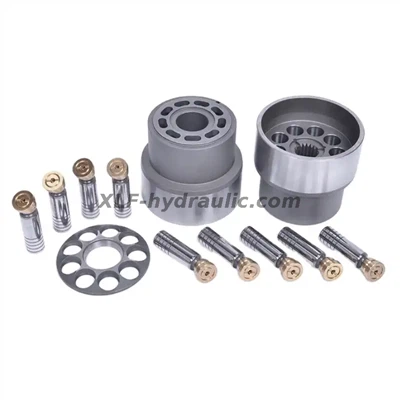
Wait, but not all variable speed pumps are created equal. I get asked all the time: "What makes a pump the best one for pool clarity, not just energy savings?" The answer is precision, reliability, and the ability to handle different loads without stuttering. Let's talk about hydraulic axial piston pumps, because that's the tech behind the pumps I sell-stuff like the GPM 3FC016B01 Hydraulic Axial Piston Type Pumps for Wheel Loaders, but wait, hold on, that's for heavy equipment, but the axial piston design is what makes variable speed pumps so smooth. Axial piston pumps use pistons moving in a cylinder block, which lets them adjust flow rate super accurately. Unlike older centrifugal pumps that can have sudden drops in flow when you adjust speed, axial piston pumps maintain consistent, steady flow-no peaks, no valleys, no turbulence spikes. That steady flow is key for water clarity.
Let me explain that steady flow thing again because it's important. If your pump's flow rate is all over the place, the skimmer doesn't work right. Skimmers rely on a specific amount of water flow to pull surface debris in-too fast, and they skip over it; too slow, and they don't pull anything at all. A good variable speed pump with axial piston tech, like the Rexroth A8VO Best Variable Speed Pump Used in Various Excavators (wait, yes, that same piston tech translates perfectly to pool pumps-don't let the excavator link scare you, it's the same precision engineering), can hold that exact flow rate whether you're running low or medium speed. So your skimmer's working 100% of the time, not half-assed like with a single-speed pump. Less debris on the surface means less stuff that can break down and turn cloudy.
Another big one: chemical distribution. You can have all the chlorine and pH balanced right, but if your pump isn't circulating evenly, chemicals will just sit in spots. Some parts of the pool will be too chlorinated, some not enough, and the stagnant spots where chemicals don't reach are where algae starts growing-algae that makes water green and cloudy. Variable speed pumps let you run a gentle, continuous circulation that pulls water through the entire filtration system and chemical lines (your pool's return jets) without rushing. The return jets push water in a smooth, even pattern, so chemicals get mixed everywhere, algae can't take hold, and dirt doesn't settle. I've had a customer with a large in-ground pool that had dead spots by the stairs-after switching to a variable speed pump with a consistent flow, those spots cleared up in a week, no extra chemicals needed.
Wait, let's touch on maintenance too, because that ties into clarity. Old single-speed pumps run hot a lot, especially when they're cranked all day. Hot motors mean more wear and tear, which can lead to leaks or clogs in the pump itself. A good variable speed pump runs cooler because it's not working harder than it needs to, so it's less likely to get clogged or break down. A pump that's working consistently and not breaking down means your pool's always circulating-no gaps where water sits and turns cloudy. The pumps I sell, like the A10VO85 Volvo Hydraulic Pump VOE11410664 VOE11172711 VOE11173090 VOE11118936 VOE11173952 VOE17219863 VOE15079525 VOE17219864 VOE15079526, are built to last, so you don't have to worry about mid-season pump failures that leave your pool a mess.
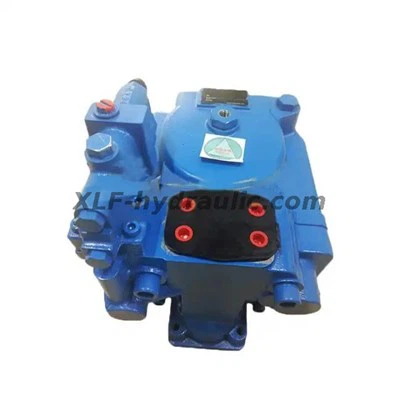
I know some of you might be thinking: "I've had a variable speed pump before, and my water's still cloudy. Is it just a scam?" Probably not-it's about using it right, and getting the best model. Some cheap variable speed pumps cut corners on the piston design, so their speed adjustments are jerky, flow is inconsistent, or they can't maintain low speeds long enough. The good ones-like the Eaton Vickerd PVB Series Axial Duplex Piston Pump for Industrial Machinery and Original Eaton Vickers PVM Series Hydraulic Duplex Piston Pump for Flat Shovel-are built with that same precision, so you can set a low speed that runs all day without issues. You don't have to crank it up every hour; just set it and forget it. That steady, low flow is what makes the difference between "meh" clarity and "wow" clarity.
Let's throw in a real example from a few months back. A customer in Florida called me panicking-their pool was so cloudy, they thought they'd have to drain and refill it, which would cost them thousands. They had a two-year-old variable speed pump, but it was a no-name brand, and they were only running it for 4 hours a day at medium speed. I talked them into upgrading to a reliable variable speed pump (one of the Eaton models) and adjusting their run time: 18 hours at low speed, 2 hours at medium speed. In 10 days, their water was crystal clear. Why? Because the low speed was circulating enough to keep debris moving, the skimmer was working, chemicals were distributed, and the filter had enough time to trap tiny particles. They also saved 70% on their electric bill, which was a nice bonus, but the clarity was the big win.
Wait, also let's address a myth I hear all the time: "Running a pump 24/7 is better for clarity." No, that's a waste of energy and not necessary. With a good variable speed pump, you don't need to run it that long. The EPA says pools only need about 2–4 turnovers per day-meaning pumping the entire volume of water through the filter 2–4 times. A variable speed pump can do that in 6–8 hours total, instead of the 12–16 hours a single-speed needs. Running it at low speed for the rest of the time keeps water moving, no overworking the pump, and that consistent flow keeps clarity up. If you run it 24/7, you're just wasting electricity and possibly stirring up too much dirt because the flow is constant at a speed that's a bit too high after the initial turnover.


Another point: tiny particles. The ones you can't see with the naked eye. Single-speed pumps rush water through the filter, so those particles get pushed right through. Variable speed pumps at low speed let the filter medium (whether it's sand, cartridge, or DE) actually catch those particles. It's like using a fine sieve vs. a colander-slow and steady gets the small stuff. That's why switching to a variable speed pump often leads to less need for clarifiers or flocculants, which are chemicals that help tiny particles clump together so the filter can catch them. Less chemicals mean safer water for swimming, and no extra cost.
Let me wrap this up for anyone still on the fence. The best variable speed pump isn't just an upgrade for your electric bill-it's the most effective tool you can get for keeping your pool water clear. It creates steady, consistent flow that works with your filter, skimmer, and chemicals, not against them. The key is getting a pump built with precision engineering (like the axial piston models I carry) so those flow adjustments are smooth and reliable, not frustrating. If you're tired of scrubbing cloudy water every weekend, spending too much on chemicals, or dealing with a pump that dies mid-summer, it's time to make the switch.
If you're ready to stop fighting your pool and start enjoying that clear, blue water you've been dreaming of, reach out to my team to chat about the right variable speed pump for your pool size and needs. We don't do one-size-fits-all-we work with you to figure out exactly what will keep your water clear, your energy bills low, and your pump running for years. Don't let another cloudy summer pass you by-let's get your pool looking its best.
References:
- U.S. Environmental Protection Agency. (2021). Pool Pump Efficiency and Water Quality. Retrieved from EPA's Water Sense Program
- Pool & Hot Tub Alliance. (2022). Best Practices for Pool Water Circulation and Filtration
- Hydraulic Institute. (2020). Axial Piston Pump Technology for Consistent Fluid Flow in Water Treatment Applications