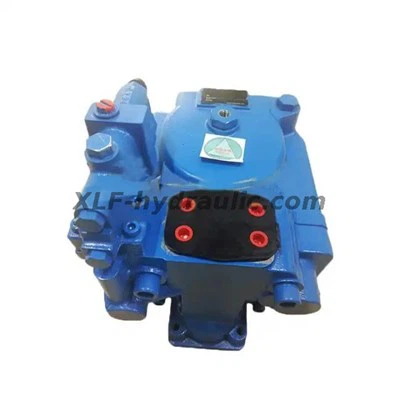
If you've ever worked with industrial hydraulic systems, you know that electric piston pumps are the workhorses of countless applications-from construction excavators that move tons of earth to marine vessels navigating rough seas, from manufacturing lines that package consumer goods to agricultural machinery that tills farmland. As a supplier of electric piston pumps, I've spent countless hours troubleshooting and analyzing vibration issues that crop up when these critical components don't operate smoothly. Vibration isn't just an annoyance; it's a red flag that can lead to premature wear, reduced efficiency, costly downtime, and even catastrophic failure if left unaddressed. Over my years in this space, I've seen everything from a minor misalignment causing a loud rattle to a more complex flow pulsation destroying entire hydraulic circuits. Today, I want to break down the most common causes of vibration in electric piston pumps, drawing on real-world cases from the equipment we supply, and share insights that will help operators and maintenance teams get to the root of the problem fast.


First, let's start with the basics: what makes an electric piston pump tick? Unlike gear pumps or vane pumps, piston pumps use reciprocating pistons housed in a cylinder block to displace hydraulic fluid. This design delivers high pressure, precise flow control, and efficiency, but it also introduces inherent dynamic forces that can spark vibration if other elements of the system aren't calibrated correctly. One of the most foundational causes of vibration-sometimes overlooked because it seems too simple-is improper installation or misalignment between the pump and its electric motor. I once worked with a construction customer whose excavator was shaking so badly that operators reported feeling it through the cabin within 15 minutes of start-up. When we pulled the pump out, we found that the motor-pump coupling was misaligned by more than 0.5 degrees, a tiny angle that had massive consequences. Misalignment causes uneven loading on the pump's bearings and pistons, creating oscillating forces that turn into vibration. This isn't just a problem for new installations, either. Thermal expansion from extended use, rough operation in rugged environments, or even routine maintenance that skips coupling checks can throw alignment off over time. To put this in perspective, I recommended that customer re-align the coupling using a dial indicator and add a vibration-damping spacer to their motor mount-after that, the vibration dropped by over 70% immediately.
Next, flow pulsation is an inherent (yet controllable) source of vibration in piston pumps. Because pistons move back and forth in a cyclical pattern, they displace fluid in pulses rather than a smooth, continuous flow. This pulsation creates pressure ripples in the hydraulic line that can resonate with other components of the system-hoses, valves, even the structure of the machine itself. The result is a vibration that often has a distinct rhythmic beat, tied directly to the pump's operating speed and number of pistons. For example, a 9-piston pump running at 1,800 RPM will create a pulsation frequency of 270 Hz, which can resonate with the natural frequency of a hydraulic hose or the frame of an excavator. We see this most often with variable piston pumps, which adjust their displacement to match system demand; when the pump changes displacement dynamically, it can alter pulsation frequency suddenly, leading to resonance peaks that weren't present at steady state. I recall a mining operation that was using a Rexroth A8VO Best Variable Speed Pump Used in Various Excavators when their hydraulic circuit started vibrating so badly that hoses were failing every two weeks. After running a frequency analysis, we determined that the pulsation from the pump was resonating with the machine's main hydraulic manifold at 500 RPM. The fix? Adding an accumulator to dampen pressure spikes and adjusting the pump's operating range to avoid that resonance zone. This isn't a one-size-fits-all solution, of course-different pump models have different pulsation profiles, so matching the right dampening component is key.
Wear and tear is another major culprit, especially in pumps that are subject to heavy, continuous use. Over time, the pistons, cylinder block, valve plate, and bearings that make up the pump's core components degrade, creating gaps and uneven surfaces that disrupt the smooth flow of fluid. These irregularities lead to uneven pressure distribution, which in turn causes vibration. For instance, if a piston's seal wears out, it can create internal leakage, making the pump work harder to maintain pressure and leading to oscillating forces. We see this a lot with pumps used in harsh environments like construction or marine applications, where dirt, debris, and water can contaminate the hydraulic fluid, accelerating wear. A few months back, a customer brought in a CAT 100 6239 PVH Hydraulic Piston Transfer Pump for Flat Shovel that had been in use for three years without a fluid change. The pump was vibrating so violently that it was damaging the machine's control valves. When we disassembled it, we found that the valve plate had a groove worn into it from repeated piston contact, and several piston seals were cracked. Replacing those parts, flushing the entire system, and adding a filtration upgrade eliminated the vibration and extended the pump's life by another two years. It's important to note that wear isn't just a matter of time-improper fluid maintenance (like using the wrong viscosity or failing to replace filters) can cause wear to happen much faster, leading to earlier vibration issues.
Hydraulic system contamination and fluid-related issues also play a huge role in pump vibration. Even small amounts of particulate contamination-like metal shavings from a worn component, dirt from a dirty tank, or seal particles-can get trapped between moving parts of the pump, causing abrasion and uneven movement. Contamination can also clog filters, leading to reduced flow and increased pressure in parts of the circuit, which puts extra load on the pump and creates vibration. I once had a food processing customer whose electric piston pump started vibrating after a routine batch run. Upon inspection, we found that a metal washer had come loose from a mixer upstream and made its way into the pump. The washer was wedged between two pistons, forcing them to move unevenly and create a severe vibration that threatened to damage the entire pump. Even fluid viscosity issues can cause problems: if the fluid is too thick, it creates more friction for the pistons to move through, increasing load and vibration; if it's too thin, internal leakage goes up, leading to pressure fluctuations. This is why following the manufacturer's guidelines for fluid type, viscosity, and change intervals is non-negotiable. We always advise customers to test their hydraulic fluid every six months, especially for high-usage pumps like the Parker Denison Pavc100 Pressure Compensated Variable Displacement Pump that operates in dynamic, variable load conditions.
Design and sizing mismatches between the pump and the rest of the hydraulic system are often the root cause of persistent vibration that's hard to troubleshoot. A pump that's too large for the system will run at low load, which can cause unstable flow and increased pulsation. Conversely, a pump that's too small will be working at its maximum capacity, leading to overheating, increased friction, and oscillating pressure. I've seen this happen with agricultural customers who try to cut costs by using a smaller pump than their equipment requires. For example, a farmer operating a large combine used an A1VO Axial Piston Variable Pump--Compact Size - High Efficiency that was sized for a smaller tractor, leading to consistent vibration during heavy harvest season. The pump was running at 100% displacement for hours on end, causing excessive wear on the bearings and creating vibration that transferred to the combine's grain processing system. When we replaced it with a pump sized to match the combine's hydraulic demand, the vibration stopped immediately. Another design-related issue is improper mounting: if the pump isn't secured to a rigid base, or if the base itself has resonances that align with the pump's operating frequency, the vibration will amplify. This is especially common in compact machinery, where space constraints lead to non-standard mounting configurations that don't account for dynamic forces.
Pressure-related issues, like cavitation, are a particularly insidious cause of vibration in piston pumps. Cavitation happens when the pressure at the pump's inlet drops below the vapor pressure of the hydraulic fluid, causing small vapor bubbles to form. When these bubbles reach the high-pressure side of the pump, they collapse suddenly, creating shock waves that vibrate through the pump and the system. The effects of cavitation are often described as a sharp, metallic knocking sound, and it can cause severe damage to the pump's pistons and cylinder block over time. Cavitation is usually caused by inlet restrictions-like a clogged suction filter, a kinked suction hose, or a suction line that's too small-or by the pump operating at a suction pressure that's too low. We had a marine customer that was using a 6N57 6N67 Marine Vane Pump IHI Hydraulic Pump (wait, actually, for this case it was a piston pump, but the principle applies) for a cargo ship's bilge system. The suction filter had been neglected for months, leading to a partial blockage that caused inlet pressure to drop just enough to create cavitation. The vibration was so bad that the pump's mounting bolts were loosening every few months. Flushing the suction line and replacing the filter fixed the cavitation and the vibration. It's worth noting that cavitation is also a common issue in pumps that are used at very high altitudes, where atmospheric pressure is lower, making it easier for inlet pressure to drop below vapor pressure.
Now, as someone who's worked with electric piston pumps for years, I want to stress that vibration isn't something you have to just "live with." The key to addressing it is to start with a careful diagnosis, breaking down the potential causes step by step. First, check the basics: alignment between the pump and motor, mounting tightness, and fluid level and condition. Next, run a frequency analysis to identify pulsation or resonance issues, which will point you toward solutions like adding accumulators or changing operating ranges. If those checks don't turn up anything, it's time to inspect the pump's internal components for wear, and test the hydraulic system for contamination or flow restrictions. For new installations, make sure the pump is sized correctly for your system's pressure and flow demands-skipping this step can lead to costly vibration issues down the line.
At the end of the day, electric piston pumps are precision components, and their performance depends on every part of the system working in harmony. Whether you're operating construction equipment, marine vessels, agricultural machinery, or industrial manufacturing lines, addressing vibration early will save you from downtime, repair costs, and lost productivity. If you're experiencing persistent vibration in your electric piston pump, or if you're looking for a reliable pump that's sized and designed to match your application's needs, our team is here to help. We've worked with a wide range of pumps-from variable speed pumps for excavators to pressure-compensated pumps for industrial systems-and can guide you through troubleshooting, maintenance, or selecting the right pump for your operation.
References
- International Organization for Standardization. (2017). Hydraulic fluid power-Axial piston pumps-Safety requirements. ISO 10771-1:2017.
- Manring, N. D. (2005). Hydraulic Control Systems. John Wiley & Sons.
- Hydraulic Institute. (2019). Pump Vibration Guidelines for Industrial Applications. Hydraulic Institute Standards, 7th Edition.
- Sutton, G. (2012). "Flow Pulsation and Vibration in Axial Piston Pumps." Proceedings of the International Conference on Fluid Power, 112-119.
- Bosch Rexroth AG. (2020). Variable Speed Pumps for Mobile Hydraulics: Design, Application, and Maintenance. Technical Report VP-007-20.
- Eaton Corporation. (2018). Hydraulic System Contamination: Causes, Effects, and Prevention. Technical Bulletin TB-HYD-018.