Axial Piston Pump Temperature Range: Seal, Fluid, and Operating Limits


Every axial piston pump has a temperature window it was designed to run in. Go above it and seals degrade, oil thins out, and internal parts wear fast. Go below it and oil thickens, seals harden, and the pump can't lubricate itself properly. Getting this right matters more than most buyers realize - pump failures blamed on "bad quality" are often just a seal or fluid mismatch in the wrong temperature range.
Quick Answer
A standard industrial axial piston pump runs from roughly -20°F (-29°C) to 180°F (82°C) with nitrile seals. The upper limit is set by seal material: nitrile tops out around 180°F, polyurethane around 200°F, and Viton can go higher. Mobile and extreme-duty pumps with Viton seals reach 195–200°F, while cold-rated versions extend the low end to -25°F. The pump's temperature limit is always tied to the hydraulic fluid you run - the seal rating and oil viscosity must match.
What Sets the Temperature Limit
Two things decide how hot or cold a pump can run: the seals, and the fluid.
Seal Material Is the Upper Limit
The cast iron housing and hardened steel pistons handle heat fine. The weak point is the seal package:
Nitrile (NBR): Standard on most industrial pumps. Degrades above 180°F (82°C) - hardens, cracks, loses elasticity.
Polyurethane (PU): Slightly better heat resistance, tops out around 200°F (93°C).
Viton (FKM): High-temperature seal material, used on mobile and heavy-duty pumps. Handles sustained heat that nitrile can't.
Below the low end, seals harden and lose flexibility regardless of material. A nitrile seal exposed to -20°F for months will crack on the next cold start.
Fluid Viscosity Is the Working Limit
Seals set the ceiling, but the oil sets whether the pump can actually operate. When oil gets too hot, viscosity drops - thin oil leaks past piston seals, flow and pressure fall off. When oil is too cold, it's thick and drags through the suction line, causing wear and, in severe cases, seizure on startup.
A pump with a wide seal rating still needs hydraulic oil with a viscosity index that matches your climate.
What Happens Outside the Range
Too hot: Seal rubber loses elasticity and starts leaking internally. Oil viscosity drops, film thickness between piston and valve plate thins, metal-to-metal contact increases. You'll see pressure loss, higher noise, and eventually scored parts. Sustained high temperature also oxidizes the oil, shortening its service life.
Too cold: Oil doesn't flow through the suction line fast enough, which causes cavitation on startup. Thick oil drags on bearings and piston slippers. Seals are stiff and don't seal until the pump warms up. This is why cold-weather machines need a warm-up cycle before high-RPM operation.
Temperature Ranges by Pump Model
These are typical ranges for pumps we stock and rebuild. Always confirm against the original service manual for your exact serial number.
| Pump | Seal type | Typical range | Application |
|---|---|---|---|
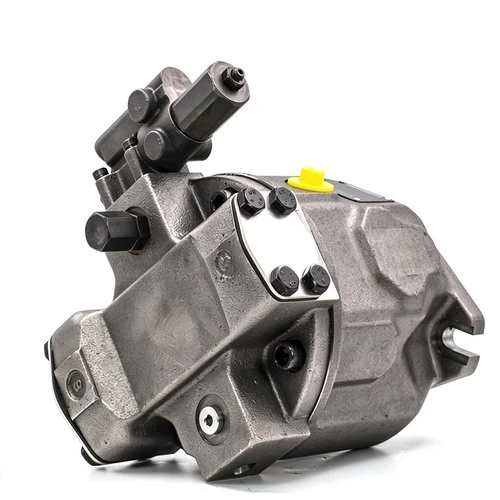
| Standard industrial axial piston pump | Nitrile | -20°F (-29°C) to 180°F (82°C) | Presses, machine tools, steady-duty |
| Parker PGP505 replacement pump | Reinforced nitrile | -15°F (-26°C) to 190°F (88°C) | Agricultural, forestry, fluctuating weather |
| Eaton Vickers PVB series | Nitrile, heat exchanger port | 0°F (-18°C) to 195°F (91°C) | Continuous-duty industrial, stamping presses, injection molders |
| CAT 172-5636 replacement double plunger pump | Viton | -25°F (-32°C) to 200°F (93°C) | Bulldozers, arctic and desert duty |
| CAT 185-3508 PVH pump | Nitrile/Viton | -10°F (-23°C) to 195°F (91°C) | Excavators, variable mobile duty |
For comparison, vane pumps top out around 160°F (71°C) - their vanes are more heat-sensitive than axial piston elements. If your system runs hot, an axial piston pump handles it better than a vane pump.
Pump Housing Temperature Is Not Oil Temperature
One thing technicians get wrong: the housing feels hot, so they assume the oil is overheating. The housing runs hotter than the bulk oil because it's where bearing friction and piston side-loading concentrate. A housing reading of 180°F can mean the reservoir oil is 140–150°F, which is normal.
Conversely, a cold morning doesn't mean the pump is cold-rated. Ambient temperature and operating temperature are different numbers - a machine sitting outside at 10°F will have thick oil and stiff seals until it warms up, even if the pump's rated low end is -20°F.
How to Pick the Right Pump for Your Climate
Hot climate or continuous-duty industrial: Look for Viton seals, a heat exchanger port, and a pump rated for 195°F+. Match with anti-wear hydraulic oil rated for high operating temperatures.
Cold climate: Prioritize low-temperature-rated seals and a pump that tolerates thick oil on startup. Use a low-viscosity winter-grade fluid and idle warm-up before working at high pressure.
Mobile equipment that sees both extremes: CAT-style replacement pumps with Viton seals cover the widest range. The CAT 172-5636 and 185-3508 are built for morning cold and afternoon heat on job sites.
Replacing an old pump: Match the original unit's spec. The system was designed around that temperature range - swapping to a pump with a narrower range can cause problems even if flow and pressure match.
FAQ
What's the normal operating temperature for a hydraulic pump? Most systems run 120–160°F (49–71°C) at the reservoir. Housing temperature runs higher, typically 150–180°F. Sustained reservoir oil above 180°F is a problem - check cooling, oil condition, and internal leakage.
Can I run a nitrile seal pump in a hot climate? Nitrile handles intermittent heat fine, but sustained operation above 180°F will age the seals fast. For continuous high-heat duty, specify Viton seals or add a heat exchanger.
Does cold weather damage hydraulic pumps? Cold itself doesn't damage the pump, but cold-starting with thick oil does. Always warm up the system at low pressure before high-RPM work, and use winter-grade hydraulic fluid.
What seal material should I choose for high-temperature duty? Viton (FKM) is the standard choice above 180°F. Polyurethane works in the 180–200°F range but is less common on complete pump assemblies.
How often should I check pump temperature? On mobile equipment, watch it during break-in and after any rebuild. On continuous-duty industrial systems, monitor reservoir oil temperature regularly - a rising baseline means the system is running hotter than it should.
Conclusion
Pump temperature limits come down to seal material and fluid viscosity, not a marketing number. Match the seal to your worst-case heat, match the oil to your climate, and give cold machines a warm-up before working hard. If you're replacing a pump for a specific climate or duty cycle, send us the application and ambient conditions - we'll confirm whether a nitrile, polyurethane, or Viton-seal pump fits.
We stock Parker PGP505 replacements, Eaton Vickers PVB series pumps, CAT 172-5636 and 185-3508 replacement pumps, plus Rexroth A10VSO, Kawasaki K3V, and Komatsu HPV series units.