Hydraulic Pump Cavitation: Causes, Symptoms, and How to Fix It
If your pump sounds like it's swallowing gravel, has lost pressure, and the noise gets worse as RPM climbs, you're dealing with cavitation. It's the most common cause of premature axial piston pump failure we see in the shop - and almost every case traces back to the suction side, not the pump itself.
After troubleshooting cavitation on everything from Eaton Vickers PVE truck pumps to Rexroth A10VSO industrial units and Kawasaki K3V excavator pumps, I can tell you that 80% of the time, the fix is in the plumbing, not a new pump.
Quick Answer
Cavitation happens when the pump can't pull enough fluid through the inlet, creating a partial vacuum where hydraulic oil vaporizes into bubbles. Those bubbles collapse violently when they reach the high-pressure side, generating micro-shocks that erode the valve plate and pistons, produce a gravel-rattling noise, and cause pressure loss. The fix is almost always on the suction side: upsized suction line, clean filter, correct oil level, and adequate inlet pressure.
What Cavitation Actually Does to Your Pump
Here's the part most operators underestimate. The noise you hear - the rattling, crackling sound - isn't just annoying. Each bubble collapse happens at a localized pressure spike that can reach thousands of PSI, concentrated on a tiny spot on the valve plate or piston surface.
Over hours of operation, this erodes the metal. You'll see pitting on the valve plate, scored piston slippers, and eventually internal leakage that drops system pressure. A cavitating pump that's run for 500 hours will often need a full rebuild - even though the root cause was a $20 clogged suction filter.
The 4 Root Causes
1. Restricted Suction Line or Filter
This is the #1 cause. The pump inlet is too small, the suction hose is too narrow, the filter is clogged, or there are too many elbows. Any restriction drops pressure at the inlet, and when pressure drops low enough, the oil boils - even at 120°F.
We see this constantly on CAT backhoes and Komatsu PC-series excavators where the suction filter hasn't been changed in over a year. The filter clogs, the pump starts cavitating, and the operator thinks the pump is dead. Replacing the filter and upsizing the suction line fixes it.
2. Wrong Oil Level or Viscosity
If the tank level is below the suction pickup, the pump starts sucking air. If the oil is too viscous (cold weather, wrong grade), it can't flow through the suction line fast enough. Both create the same low-pressure condition at the inlet.
Water contamination makes this worse - water lowers the boiling point of hydraulic oil, so bubbles form at even higher inlet pressures. If your oil looks milky, that's water, and it's a cavitation risk.
3. Pump Mounted Too High or Operating Outside Spec
Axial piston pumps are suction-lift limited. Mount the pump more than about 15 inches above the tank oil level, and atmospheric pressure can't push the fluid up fast enough. The pump creates a vacuum, and bubbles form.
Running the pump at much higher RPM than rated (to get more flow out of an undersized pump) also increases inlet velocity and drops pressure. Conversely, running a pump at very low RPM under heavy load doesn't cause cavitation - but it can cause other problems, which is a separate topic.
4. Worn Internal Parts
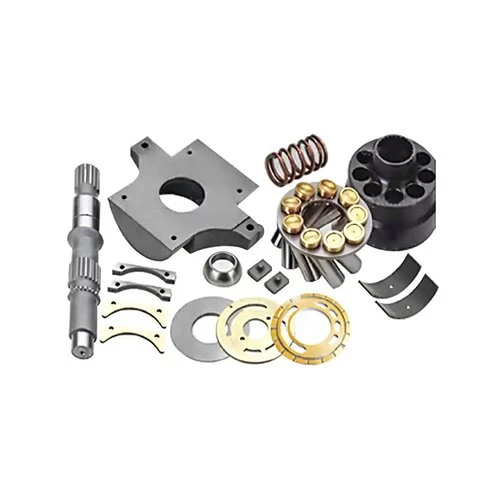
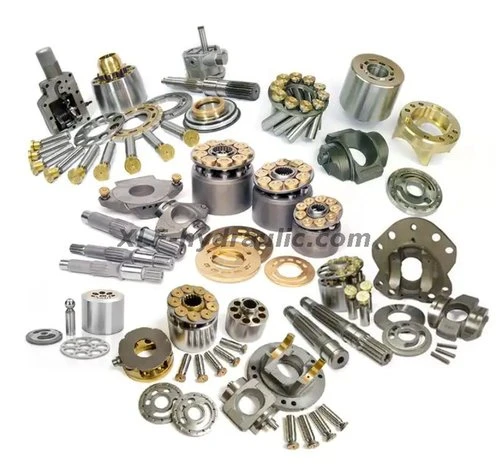
When the cylinder block, valve plate, or pistons wear, internal leakage increases. The pump has to work harder to maintain pressure, which drops effective suction pressure. This is a secondary cause - it usually shows up after years of operation, not as an initial setup problem.
How to Fix It: 4 Steps
Step 1: Upsize the Suction Line
The suction line should be at least one size larger than the pump inlet port. If the pump has a 1-inch inlet, run 1.25-inch hose. Every foot of narrow suction line is a restriction.
Minimize elbows - use 45-degree bends instead of 90-degree, and avoid sharp reducers. Every fitting in the suction path adds pressure drop.
Step 2: Service the Suction Filter
Use a low-micron, high-flow suction filter (10-micron is typical) with a bypass valve. Change it every 500 hours of operation - more often on construction or agricultural equipment in dirty environments.
Don't use a return-line filter as a suction filter. They're designed for the return side and restrict flow too much on suction.
Step 3: Check Oil Level and Temperature
Maintain the tank level at least 2 inches above the suction pickup. Check it daily - it takes 30 seconds. In cold weather, idle the machine for 5–10 minutes before working at high RPM. Cold, thick oil cavitates easily.
If there's foam on top of the tank, that's air getting into the system. Bleed it by running the pump at low speed and loosening the suction fitting until air escapes.
Step 4: Verify Mounting and Inlet Pressure
If you can't mount the pump lower than 15 inches above the tank, install a suction booster pump - a small low-pressure impeller that feeds the inlet. This is common on truck-mounted pumps where space is tight.
If you've done all of the above and cavitation persists, check the tank breather. A clogged vent creates a vacuum in the tank that starves the suction side.
A Real-World Example
A farm equipment operator brought in a CAT backhoe loader with a loud knocking noise and slow cycle times. The suction line was 3/4 inch (should have been 1 inch), the filter hadn't been changed in 18 months, the pump was mounted 20 inches above the tank, and the oil level was 2 inches below the pickup.
We upsized the suction line, installed a new 10-micron filter, lowered the pump mount to 12 inches, and topped off the oil. The noise was gone on the first test run. No pump replacement needed.
Brand-Specific Notes
Cavitation principles are the same across manufacturers, but some pump families are more sensitive:
Rexroth A10VSO / A11VO: These are high-efficiency pumps with tight clearances. They cavitate easily if the suction line is even slightly restricted. Check the inlet pressure gauge spec on the datasheet - typically 0.5 bar minimum at the inlet.
Kawasaki K3V / K5V: Heavy-duty excavator pumps. They're tolerant of mild cavitation but won't tolerate sustained operation - the valve plate pits quickly.
Komatsu HPV series: PC200/PC300 pumps. Cavitation here often presents as a whine that's worse when the hydraulic oil is cold. Warm-up time fixes it.
Eaton Vickers PVE / PVM / PVH: Truck and industrial pumps. The PVE series in particular is sensitive to suction line sizing on mobile installations.
Sauer PV90R: Closed-circuit pump used in skid steers. Cavitation here usually means the charge pump (which feeds the closed loop) is worn - not the main pump suction line.
Linde HPR: Bent-axis pumps. Similar sensitivity to Rexroth - maintain inlet pressure spec, don't over-speed.
FAQ
What does pump cavitation sound like? A rattling, crackling noise often described as "gravel in a tin can" or "marbles rattling around." It's distinct from the high-pitched whine of normal pump operation and gets louder as RPM increases.
Is cavitation the same as a worn pump? No. Cavitation is a suction-side problem that causes wear. A worn pump is the result of cavitation (or other damage) over time. If you fix the suction issue early, you stop the wear before it damages internal parts.
Can I keep running a cavitating pump? For a short time, yes - but every hour of operation pits the valve plate and erodes piston surfaces. We've seen pumps destroyed in as little as 200 hours of sustained cavitation. Don't ignore it.
Does cold weather make cavitation worse? Yes. Cold hydraulic oil is thicker, so it resists flowing through the suction line. Always warm up the system before working at high RPM in cold conditions.
What suction filter micron rating should I use? 10-micron suction filters are standard for most axial piston pumps. Some applications use 25-micron for less restriction - check the pump manufacturer's spec. Never go coarser than what the pump manual recommends.
Conclusion
Cavitation isn't a pump failure - it's a plumbing failure that destroys pumps. Before you rebuild or replace an axial piston pump, check the suction line size, the filter condition, the oil level, and the mounting height. Nine times out of ten, the fix costs less than $50 and an hour of labor.
We supply replacement pumps, spare parts, and rebuild components for Rexroth, Kawasaki, Komatsu, Eaton Vickers, Sauer, Linde, and Nachi pump series. If your pump is cavitating and you've gone through the checklist, send us the model and what you've tried - we'll help you figure out whether it's a suction-side fix or a worn pump that needs parts.