5 Principles That Parker Hydraulic Systems Share with Eastern Philosophy

If you've spent years rebuilding Parker piston pumps and F12 motors, you stop seeing just metal and seals. After enough time inside a PV063 swash plate pump or a PAVC repair kit, the operating principles start to look familiar - the same principles that show up in Taoist balance, Buddhist impermanence, and the idea that a system is more than its individual parts.
This isn't philosophy class. These are the engineering principles that make a Parker pump work on a harvest day when a tractor can't afford to stop.
Quick Answer
Parker hydraulic systems operate on principles that mirror major philosophical traditions: balanced forces (swash plate angle vs piston stroke), reciprocating action (one piston pushes while another pulls), wholeness (a repair kit works only when every component is replaced together), energy conversion (F12 motors turn pressure into rotation), and adaptation (P2/P3 variable pumps adjust output to load). These aren't metaphors - they're the engineering reasons Parker pumps run reliably in the field.
1. Balance: The Swash Plate and the Tao
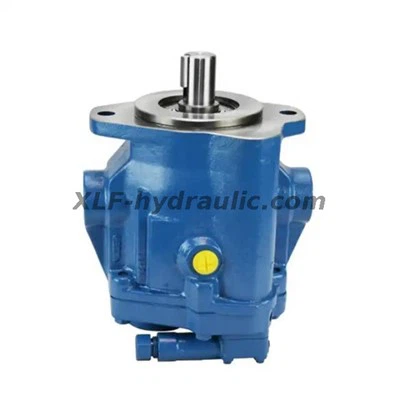
A swash plate pump like the Parker PV063 works on a tilted disk. Pistons ride against that disk at an angle, sliding in and out as the cylinder block rotates. If the swash plate tilts even a fraction off its design angle, the pump wastes energy, vibrates, and wears fast.
This is the same balance principle at the core of Taoism - yin and yang, opposing forces held in equilibrium. In a PV063, the swash plate (control) and the pistons (motion) have to align. Push the angle too far one way and you get too much flow and heat; too little and you can't build pressure. Parker engineers set that angle to a tolerance that leaves no room for drift, and the shims that maintain it are as thin as 0.0005 inches. On a jobsite at harvest time, that balance is the difference between finishing the field and a day lost to a failed pump.
2. Reciprocity: Every Push Has a Pull
The Parker SH5V63 and SH6V piston metering pumps move fluid in a back-and-forth cycle. One piston pushes fluid out while another draws it in. The motion depends on this give-and-take - if one piston wears and pushes harder than the others, the whole system jerks, burns fuel, and overheats.
We saw this with a farmer who called at 6 a.m. during harvest. His SH5V pump had uneven reciprocation from a worn piston ring. The engine was working twice as hard to compensate. We got him a replacement pump by noon, and he told us later the machine ran smoother than it had in years. This is the reciprocity principle - action and reaction balanced - and it's why Parker metering pumps are spec'd with matched piston sets rather than individual replacement parts.

3. Wholeness: A Repair Kit Isn't Single Parts
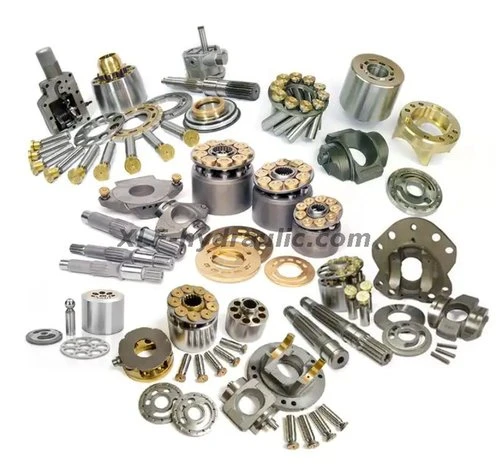
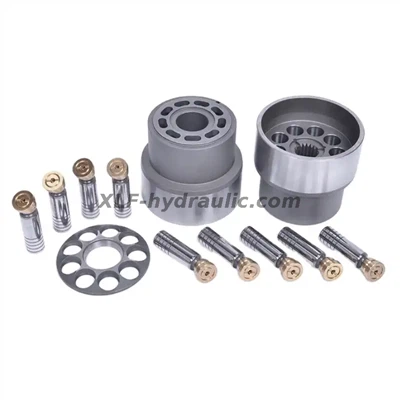
When someone orders a PAVC repair kit, they don't get one seal. They get a matched set - pistons, valve plate, retainer plate, ball guide, piston shoes, and seals - all designed to work together. Replace just one worn seal and the pump leaks internally because the surrounding parts are worn to a different tolerance.
A construction customer told us after a full PAVC kit replacement that machine output jumped 15%. Not because of one part, but because all the parts were new and matched. This is the wholeness principle - the system is more than the sum of its components. Parker's repair kits are curated this way deliberately; you can't mix and match individual parts from different sources and expect the same result.
4. Transformation: Pressure Becomes Motion
The Parker F12 series hydraulic motor takes hydraulic pressure - fluid under force - and converts it into rotational torque. That's a transformation: one form of energy becomes another, and that motion powers whatever the motor is mounted on.
A logging company we work with had an F12 motor on a tree harvester running slow. They replaced the worn rotor and seals, and the harvester went from cutting 12 trees an hour to 20. The pressure didn't change - the conversion efficiency did. This energy transformation is the same principle that shows up in many philosophical traditions as change and renewal: pressure becomes motion, motion becomes productivity.
5. Adaptation: Variable Pumps and Impermanence
The Parker P2 and P3 series axial piston variable pumps adjust their output based on load. Light load on a tractor pulling an empty trailer? The pump reduces displacement and saves fuel. Heavy load going up a grade? It increases displacement automatically.
A contractor using P2 pumps on his excavators told us he cut fuel costs by a third after switching from fixed-displacement pumps. The pump adapts instead of running at full output all day. This is the adaptation principle - recognizing that demand changes and adjusting rather than forcing a fixed output. It's the engineering version of what Buddhism calls anicca, or impermanence: systems that adapt outlast systems that resist change.
Why This Matters for Your Repair Decisions
These five principles aren't just interesting parallels. They tell you how to maintain Parker equipment:
Balance means don't improvise shim thickness on a PV063 - use the spec'd shim pack
Reciprocity means replace piston sets as a matched group, not one piston at a time
Wholeness means buy the full PAVC repair kit, not individual seals from a hardware store
Transformation means if an F12 motor is underperforming, check rotor and seal condition, not just supply pressure
Adaptation means if you're running fixed-displacement pumps where load varies, a P2/P3 variable pump will pay for itself in fuel
FAQ
Are Parker pumps better than Rexroth or Kawasaki? Different strengths. Parker pumps (PV063, P2/P3, F12) are common in agricultural and industrial mobile equipment. Rexroth A10VSO dominates industrial, and Kawasaki K3V/K5V is heavy excavator territory. Match the pump to your application, not the brand name.
Where can I buy genuine Parker PAVC repair kits? We stock Parker series spare parts including PAVC repair kits, SH5V/SH6V metering pump components, F12 motor parts, and P2/P3 variable pump components. Specify your pump model and we'll confirm the exact kit.
Can I mix Parker parts with other brands? Individual components like seals or bearings can cross-reference, but precision parts - pistons, valve plates, swash plates - should stay within the matched set. Mixing tolerances is how cavitation and vibration problems start.
How often should I rebuild a Parker piston pump? Typical rebuild interval is 6,000–10,000 hours depending on application. Signs it's time: pressure drop, unusual noise, external leaks, or visible scoring on the cylinder block during a routine inspection.
Conclusion
Parker hydraulic systems work because their engineers built in the same principles that philosophers have described for centuries: balance, reciprocity, wholeness, transformation, and adaptation. When you maintain the pump the same way - matched parts, correct shims, full repair kits - it runs the way it was designed to.
We supply Parker series spare parts across the full range: PV063 swash plate pumps, SH5V63/SH6V metering pumps, PAVC repair kits, F12 hydraulic motors, and P2/P3 variable piston pumps. Send us your model number and what's going on with the equipment - we'll tell you whether it needs a single seal, a full kit, or a replacement pump.