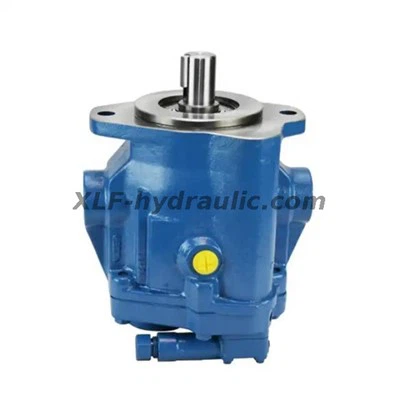
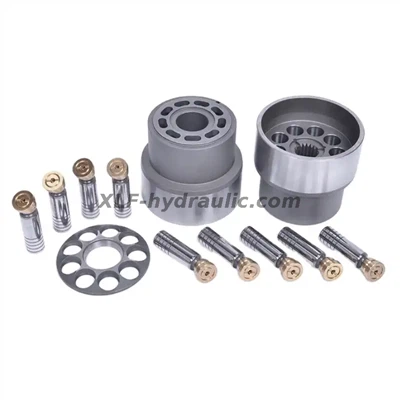
If you've ever walked the floor of a construction site, a mining operation, or a factory floor where heavy machinery hums, you've probably felt the quiet power of hydraulic systems at work. Those systems rely on pumps to turn mechanical energy into fluid power, and not all pumps are built the same. As an axial piston pump supplier who's spent years talking to operators, maintenance teams, and engineers about what keeps their machines running, I've seen firsthand how choosing the right pump type can make or break efficiency, downtime, and long-term costs. Let's break down the key differences between axial piston pumps and other common pump types-so you can make informed choices for your equipment, whether it's a crawler excavator, a flat shovel, or a heavy-duty truck.
First, let's ground this in the basics: all hydraulic pumps work by creating a partial vacuum to draw fluid in, then forcing that fluid out under pressure. But how they move that fluid varies wildly, and that's where the lines between pump types start to blur in important ways. The most common alternatives to axial piston pumps are gear pumps, vane pumps, and bent-axis piston pumps (another piston-based type, distinct from the axial design that's my area of expertise). Each has its sweet spot, but axial piston pumps stand out for their adaptability in high-demand applications, which is why they're the go-to for machinery that needs variable power on the fly.
Let's start with the most ubiquitous of the bunch: gear pumps. You'll find gear pumps everywhere from small farm tractors to light-duty construction equipment, and their design is simple: two interlocking gears turn inside a casing, trapping fluid between the gear teeth and pushing it from inlet to outlet. On paper, gear pumps sound like a win-they're cheap, easy to maintain, and compact. But here's the catch: they're fixed-displacement, meaning they move a set amount of fluid every rotation, no matter how much pressure the system needs. That's a problem for machines that don't need full power all the time. If your excavator is just lifting a load a short distance, a gear pump is wasting energy pushing more fluid than necessary, which burns fuel and generates unnecessary heat. Axial piston pumps, by contrast, are mostly variable-displacement. They can adjust how much fluid they move with each rotation by tilting the swashplate (a key component that's central to axial piston design)-so when you don't need full power, you dial back the displacement, saving energy without sacrificing performance. That's why axial piston pumps are the standard for heavy machinery, like the CAT 358 4993 Hydraulic Pompe Cu Piston For Crawler Excavator, which balances power efficiency with the brute force excavators need for digging and lifting. I've seen operators swap out gear pumps on excavators for axial piston models and cut their fuel use by 10-15% in some cases-those numbers add up fast over a year of heavy work.
Next up: vane pumps. Vane pumps use a rotor with sliding vanes that move in and out of slots, pressing against a ring-shaped casing to create chambers that draw and push fluid. They're quieter than gear pumps, smoother, and often more efficient than gear designs, which makes them popular in applications like machine tools and light industrial equipment. But again, displacement is the limiting factor for many vane pumps-most are fixed-displacement, and the variable vane pumps that exist have their own flaws. Vane pumps struggle with high pressures. Once you push them above around 2,500 PSI, the vanes start to wear out faster, and the risk of fluid leakage goes up. Axial piston pumps, though, are built for pressures up to 5,000 PSI and beyond, making them ideal for heavy-duty applications like the Original Eaton Vickers PVM Series Hydraulic Duplex Piston Pump for Flat Shovel, which handles the constant high pressure of a flat shovel's lifting and digging cycles. Another downside of vane pumps: they're finicky about fluid cleanliness. Any small debris in the hydraulic fluid can scratch the vanes or the casing, leading to leaks and reduced performance over time. Axial piston pumps have tighter tolerances too, but their design is more forgiving in many cases, and when properly maintained, they last much longer in dirty job site conditions than vane pumps do. I remember a mining operator who replaced vane pumps on his flat shovels every 18 months, but switched to axial piston pumps and went three full years without a pump replacement-hardly a trivial saving when downtime on a mining site can cost thousands of dollars an hour.


Now, let's talk about piston pumps broadly, because not all piston pumps are axial. There's another major type: bent-axis piston pumps. Unlike axial piston pumps, where the pistons move parallel to the drive shaft (that's the "axial" part, meaning along the axis of rotation), bent-axis piston pumps have their cylinder block angled, so the pistons move in a plane perpendicular to the drive shaft. On the surface, bent-axis pumps sound similar-they're also variable-displacement, high-pressure, and efficient. But here's where the key differences emerge. Bent-axis pumps have a more complex, heavier design. The angled cylinder block means more stress on the drive system, and they require more space to install, which is a problem for compact equipment. Axial piston pumps, by contrast, have a more compact profile, so they fit easier in tight engine bays on everything from small excavators to large trucks. The A10VO Series Rexroth Hydraulic Variable Axial Piston Pump is a perfect example of that compact design, used in everything from construction equipment to agricultural machinery where space is at a premium. Bent-axis pumps also tend to be more expensive upfront, and their maintenance is trickier-if you need replacement parts, the inventory is often more limited than for axial piston pumps, since they're less widely used. For operators, that means longer lead times when a part needs replacing, translating to more downtime. I've worked with a fleet manager who swapped a batch of bent-axis pumps on his site's loaders for axial piston models, and not only saved on upfront costs, but also cut part delivery times by half because axial piston parts are far more common.
Another critical difference is in control and responsiveness. Axial piston pumps' swashplate design allows for extremely precise adjustments to displacement, which means they can react quickly to changes in load. If an excavator's arm hits a hard rock mid-dig, the axial piston pump can immediately adjust its output to maintain pressure without stalling or wasting fluid. Gear and vane pumps can't do that-they push a fixed amount of fluid, so if the system doesn't need it, the excess has to be diverted back to the reservoir, creating a "throttling" loss that wastes energy and generates more heat. That heat is a silent killer for hydraulic systems-it breaks down fluid over time, leading to more wear on hoses, seals, and other components. Axial piston pumps' variable design reduces that throttling loss by up to 30% in many high-load applications, which extends the life of the entire hydraulic system, not just the pump itself.
Let's also touch on common use cases to make this concrete. If you're working on a small, light-duty job-like a small farm tractor, or a light warehouse lift-gear or vane pumps might be the right choice, because their lower upfront cost and simplicity make sense for applications that don't need variable high pressure. But if you're working on heavy equipment that operates under variable loads: crawler excavators, mining shovels, large trucks, or construction cranes, axial piston pumps are almost always the better long-term investment. For example, the CAT T6 T7 Hydraulic Single Steering Piston Ram Pump for Trucks relies on axial piston technology to handle the steering's variable power needs, especially when a truck is carrying a heavy load and needs precise, responsive steering.
One area where people often get confused is spare parts. Since axial piston pumps are so widely used, replacement parts are easy to source, no matter what brand or series you have. Whether you need parts for a Rexroth bent axial piston pump or a Caterpillar excavator pump, the market is well-supplied, which is a huge advantage for operators who can't afford to wait weeks for a special order. I've seen downtime costs spiral from $500 an hour to $10,000 an hour on large construction sites, so having easy access to parts is just as important as the pump's performance itself.
Of course, no pump is perfect. Axial piston pumps do have higher upfront costs than gear or vane pumps, and they require more precise fluid filtration to keep the swashplate and piston components working properly. But those costs are offset by lower fuel use, longer pump life, less downtime, and reduced maintenance over the lifespan of the equipment. The key is matching the pump type to your specific load demands, not just going for the cheapest option upfront.
If you're not sure which pump is right for your equipment, or if you're looking to upgrade from gear or vane pumps to a more efficient axial piston design, I'm here to help. Whether you need a replacement CAT series pump, a Rexroth variable axial piston pump, or any other axial piston pump for your machinery, we can guide you through the best options for your application and budget. Don't let outdated pump designs drag down your productivity-reach out to us today to learn more.
References:
- Hydraulic Pump Technology: Types, Applications, and Selection Guidelines. International Journal of Fluid Power, vol. 22, no. 3, 2021, pp. 145-162.
- Heavy Equipment Hydraulic System Efficiency: Comparing Axial Piston, Gear, and Vane Pumps. Construction Equipment Association Technical Report, 2022.
- Piston Pump Design and Performance: Axial vs. Bent-Axis Configurations. Society of Automotive Engineers (SAE) International, Technical Paper 2020-01-1247.