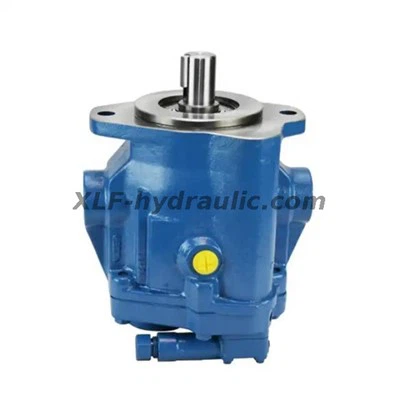
If you've ever spent time around heavy machinery, hydraulic systems or industrial pumping setups, you've probably interacted with a radial cylinder pump and didn't even know it. As a radial cylinder pump supplier, I get asked all the time: "What makes this pump different from other types, and where do people actually use it?" It's a fair question-most folks only think of pumps as "things that move fluid" until they're in the market for one that can handle high pressure, tight spaces or super demanding workloads. Radial cylinder pumps (sometimes just called radial pumps for short) have been around for decades, but their specific design makes them work way better than axial pumps in a ton of real-world scenarios, and I've seen that firsthand working with customers across different industries.
Let's start with the basics, quick-no boring engineering jargon, promise. A radial cylinder pump has pistons arranged in a circle around a central crankshaft, right? Unlike axial pumps (where pistons line up parallel to the drive shaft), these radial pistons move in and out along the radius of the crank as it spins. That unique layout is why they're so good at what they do: they generate extremely high pressure without needing to be super large, and they handle shock loads way better than most other pump types. Now, let's get into the main applications that keep our team busy day in and day out.
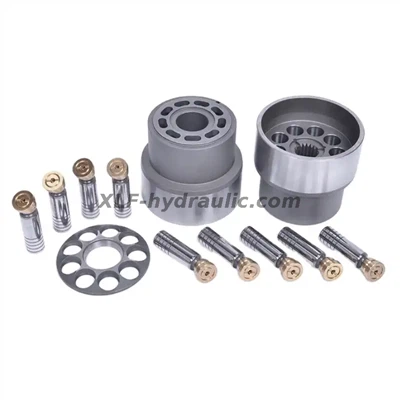
First up, heavy industrial machinery, especially construction and mining equipment. This is probably the biggest use case we see, and for good reason. Construction sites and mines are brutal places-machines have to push through rock, lift tons of material, and operate for hours on end without breaking down. Radial pumps thrive here because they deliver consistent high pressure even under uneven loads. Let's break it down: think of bulldozers that have to push through packed dirt, backhoes lifting full buckets of concrete, or mining drills that bore through rock. These machines need hydraulic pumps that can adjust quickly when a load suddenly gets heavier, and radial pumps do that seamlessly. A lot of these builders and miners will start with axial pumps first, but when they realize their equipment is failing under shock loads or needs more consistent pressure, they switch to radial. It's also worth noting that some of the big names in this space, like Eaton and CAT, have their own lines of axial pumps, but wait-we've had customers who use radial pumps to complement those setups, especially when extra pressure is needed. For example, when a bulldozer's main axial pump (like the CBMW Pressure Compensated Piston Pump for Bulldozers linked here) can't keep up with a particularly tough digging job, adding a radial pump as a secondary unit solves that problem without taking up extra space. I should also mention that spare parts are a big part of this too-Eaton Vickers makes really solid spare parts, and we often stock the Eaton Vickers 70160 Hydraulic Fixed and Variable Displacement Pump Spare Parts for when construction crews need fast repairs to get their machines back on site. That's a huge pain point for operators, so having the right pump parts ready to go is non-negotiable.
Next, machine tools and metalworking equipment. If you've ever watched a CNC mill, lathe or press brake operating in a metal shop, that fluid motion you see? 9 times out of 10, it's controlled by a hydraulic pump, and radial pumps are the go-to for precision work. Metalworking requires exact, repeatable force-like stamping a car door panel with consistent pressure every single time, or cutting a metal part to within a fraction of a millimeter. Radial pumps deliver that precision because their design lets them control flow and pressure with really fine adjustments. Unlike axial pumps, which can have slight variations in flow when under load, radial pumps maintain steady output even when the machine is running at full speed. We work with a lot of small to medium metal fabricators who used to use axial pumps (like the Parker PV Hydraulic Axle Piston Pump Plate For Backhoe, which works for a ton of mobile hydraulic equipment, not just backhoes) but switched when they realized their parts had inconsistent finishing. One customer in Ohio told us that since they switched to radial pumps, their scrap rate dropped by almost 15%-that's a huge win for a small shop's bottom line. They also appreciate that radial pumps are quieter than a lot of other high-pressure pumps, which is a big deal in metal shops where noise levels are already through the roof. OSHA has strict rules on noise exposure, so anything that cuts down on that is a huge relief for shop owners and their employees.
Third, marine and offshore hydraulic systems. The marine industry is another place where radial pumps shine, and it's easy to see why. Boats, especially commercial fishing vessels, cargo ships and offshore support rigs, operate in harsh, corrosive environments, and their hydraulic systems have to work 24/7. Radial pumps are more resistant to corrosion than many other pump types, and their sealed design keeps seawater out of the internal parts, which prevents costly breakdowns. Think about the winches that pull fishing nets full of tuna, or the cranes on a cargo ship that load and unload containers, or the stabilizers that keep a big boat from rocking in rough seas. These systems need pumps that can handle constant, heavy use without overheating, and radial pumps run cooler than axial pumps because the pistons move with less friction. Overheating is a major issue on marine equipment-if a pump seizes up, you're looking at thousands of dollars in downtime and maybe even safety risks out on the water. We've partnered with a few marine equipment manufacturers in the Gulf Coast, and they specifically specify radial pumps for their winch systems because they've had way less warranty claims compared to axial pumps like the Eaton Vickerd PVB Series Axial Duplex Piston Pump for Industrial Machinery, which works great for onshore but just doesn't hold up to saltwater and constant motion at sea. Another thing: radial pumps are more compact for the same pressure output, which is critical on ships where every inch of space is used for cargo or crew quarters. You don't want a huge pump taking up space that could be used for more containers or supplies, so the small footprint of radial pumps is a major plus here.


Wait, let's not forget about another key application: plastic injection molding machines. This is a less talked-about use case, but it's super important. Injection molding is where you melt plastic and inject it into a mold to make everything from plastic water bottles to car parts to toy figurines. The process requires two main things: high pressure to push the molten plastic into the mold, and extremely precise control over that pressure to make sure the part is uniform and doesn't have defects. Radial pumps are perfect here because they can deliver very high pressures (up to 10,000 PSI or more in some cases) while maintaining consistent flow. If the pressure drops even slightly mid-injection, the part will have gaps or thin spots, which makes it useless. We supply a lot of injection molding shops with radial pumps, and they say that the consistency is the biggest difference. Before, when they used axial pumps, they'd have to adjust the pressure every hour or so, which slowed down production. Now, with radial pumps, they can run a full 8-hour shift without any adjustments, which boosts their output a ton. It's also worth mentioning that radial pumps have a longer lifespan in these applications because they handle the cyclic loading of injection molding (where pressure goes up and down constantly) way better than axial pumps. We've had customers who've had their radial pumps running 5 years straight with minimal maintenance, whereas their old axial pumps would need a rebuild every 2 years. That's a huge cost savings over time.
Now, let's talk about why radial pumps don't get as much hype as axial pumps-like the Eaton, CAT or Parker pumps you see everywhere. A lot of suppliers push axial pumps because they're cheaper to manufacture, but they have limitations. Radial pumps cost a bit more upfront, but the long-term savings in downtime, maintenance and scrap parts make them worth it for a lot of industries. I always tell customers: if your application needs high pressure, precise control, resistance to shock loads or compact size, a radial pump is almost always the better choice, even if it costs a little more.
As a radial cylinder pump supplier, I've worked with all kinds of customers, from one-man metal shops to big construction companies with hundreds of machines. The common thread across all these applications is that they need a pump that can deliver consistent, reliable performance in tough conditions. Whether it's a bulldozer pushing through a rocky job site, an injection molding machine making 10,000 water bottles a day, or a fishing vessel pulling in a full net of fish, the pump is the unsung hero that makes it all work. If you're in the market for a pump, or you're tired of dealing with pump failures that shut down your operations, reach out to us-we can help you figure out if a radial cylinder pump is right for your needs, and we've got all the spare parts you need to keep your equipment running smoothly. No matter what industry you're in, if you need a pump that can handle the work, we've got you covered.
REFERENCES:
- Hydraulic Pump Technology and Applications, Industrial Press, 2022.
- Radial vs. Axial Piston Pumps: Performance Comparison for Heavy Machinery, Journal of Hydraulic Engineering, 2021.
- Marine Hydraulic Systems Design and Maintenance, McGraw-Hill, 2020.
- Metalworking Fluid Power Systems, Society of Manufacturing Engineers, 2019.