Why Does My Hydraulic Pump Get Louder at Higher RPM?
If you've ever stood next to a wheel loader or excavator and noticed the hydraulic pump whine gets noticeably sharper as engine RPM climbs, you're not imagining things. Pump noise and shaft speed have a direct relationship, but it's not as simple as "faster = louder." Under certain load conditions, slowing a pump down can actually make it noisier.
After rebuilding and testing axial piston pumps for mobile and industrial equipment for years, I can tell you the loud-pump complaint is usually a mix of four separate noise sources, each one affected differently by RPM. This article walks through what's actually happening inside the pump, why the relationship is counterintuitive at times, and what you can do about it.
Quick Answer
Hydraulic pumps get louder at higher RPM primarily because flow pulsations occur more frequently, pressure spikes grow larger as pistons accelerate faster, cavitation worsens when inlet fluid can't keep up, and mechanical vibration frequencies rise until components hit their natural resonance. Under heavy load at low RPM, piston side-loading can increase mechanical noise, so reducing speed isn't always the answer.
How an Axial Piston Pump Makes Noise in the First Place
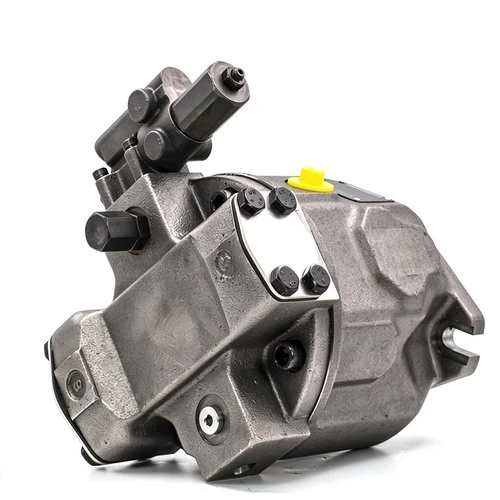
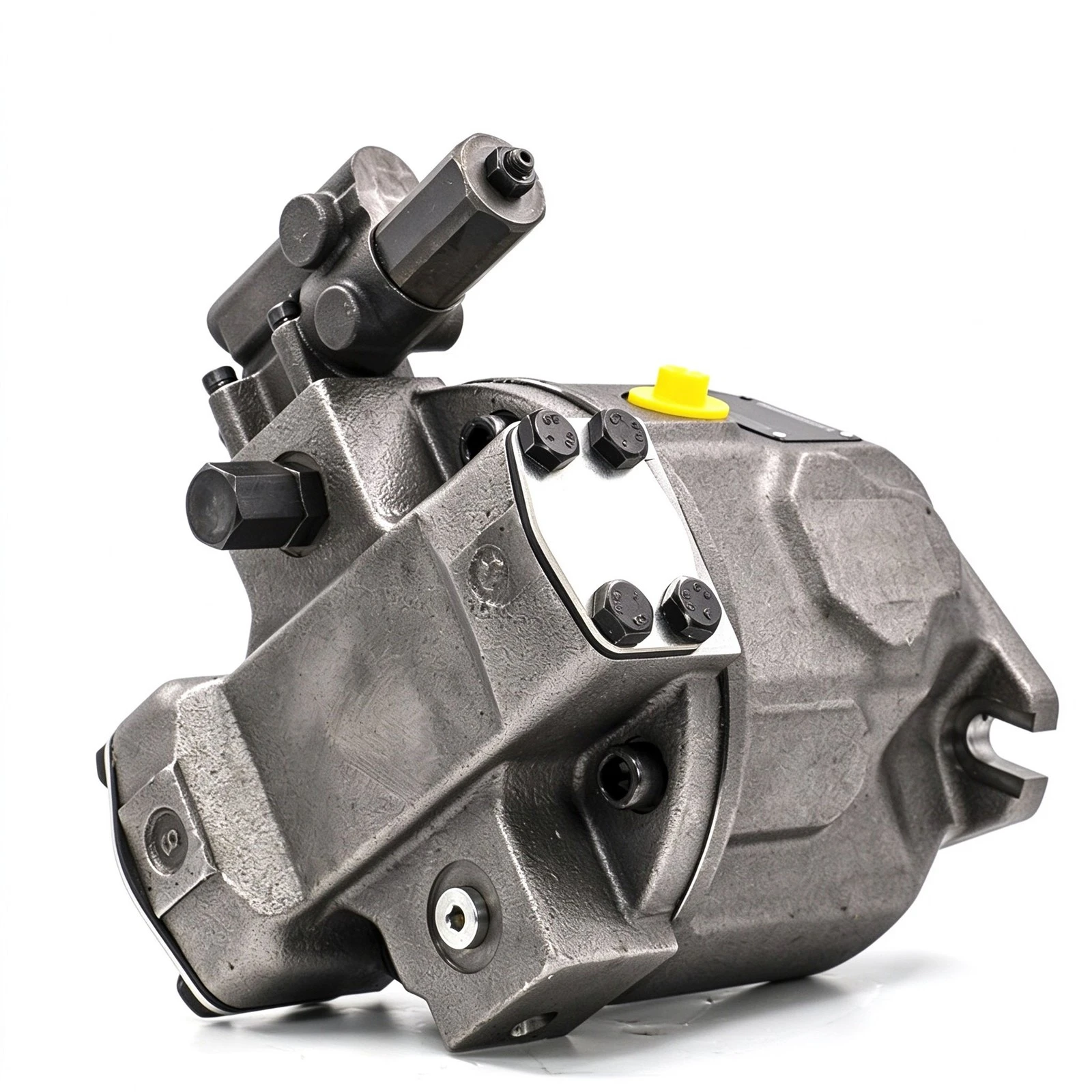
Inside an axial piston pump like a [Rexroth A10VSO]
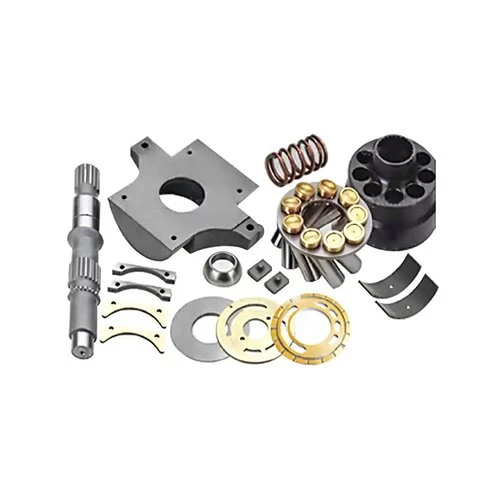
(China Rexroth A10VSO Series 32 Axial Flow Propeller Pump for Industrial Machinery Manufacturers Suppliers - Wuhan Xinlaifu) or Kawasaki K3V, a cylinder block spins on a drive shaft. Pistons bore into that block at an angle, sliding in and out as the block rotates against a stationary valve plate. Each piston pulls fluid in during half the rotation and pushes it out during the other half.
That sliding action, the sudden switch between suction and discharge, and the metal-on-metal contact between pistons, slipper pads, valve plate, and bearings - every one of these events generates vibration. At 1000 RPM, a 9-piston pump fires each piston 150 times per second. At 2500 RPM, that jumps to 375 events per second. Your ear perceives this as both louder volume and a higher-pitched whine.
The Four Noise Sources That Ramp Up With Speed
1. Flow Pulsation Frequency
Each piston transition creates a pressure spike. The number of spikes per second equals:
(number of pistons × RPM) ÷ 60
A Komatsu HPV-series pump with 9 pistons at 1800 RPM produces 270 pressure pulses per second. Doubling the shaft speed doubles the pulse rate, and each pulse sends a shock wave through the pump housing and into the hydraulic lines connected to it.
This is the noise you hear as a high-frequency whine on a Hitachi HPV091-equipped Zaxis excavator working at full engine speed. Field measurements on wheel loader applications consistently show that roughly 70–80% of the full-speed noise level traces back to these amplified pulsations.
2. Pressure Spike Magnitude
It's not just how often the spikes happen - they also get bigger. When the pump spins faster, each piston covers its stroke distance in less time. That means higher piston acceleration, more force against the fluid, and a sharper pressure jump at the valve plate transition.
Think of it like a door: closing it gently makes almost no sound, but slamming it generates an impact. Faster RPM slams the pistons into discharge more violently.
3. Cavitation
At high shaft speed, the pump tries to pull fluid through the inlet faster than the suction line can deliver it. This creates a localized vacuum at the inlet, and dissolved air comes out of solution as bubbles. When those bubbles reach a high-pressure zone, they collapse violently - producing the sharp, rattling cracking sound mechanics call cavitation.
Cavitation gets dramatically worse with RPM because the inlet pressure drop scales with the square of flow velocity. It's also the most damaging noise source: over time, those collapsing bubbles erode the valve plate and piston surfaces. Cold hydraulic oil in winter makes this much worse, because thicker fluid resists flowing through a restricted suction line.
4. Mechanical Resonance
Every component in the pump has a natural frequency - the RPM at which it vibrates sympathetically, like a wine glass when an opera singer hits the right note. If the pump speed aligns with the natural frequency of the cylinder block, valve plate, or drive shaft bearings, the noise jumps sharply, often by 10–15 dB.
We measured this on a [Vickers PVM-series]
(China PVM Series Marine Hydraulic Pump Vickers Axial Piston Pump For Vessel Equipment Manufacturers Suppliers - Wuhan Xinlaifu) industrial pump during testing: at 1800 RPM, the valve plate vibrated at 3600 Hz, which matched the drive shaft bearing frequency. Noise climbed 12 dB across the entire housing. This kind of resonant buzz is distinct from normal pump whine - it has a focused, almost metallic ring that operators notice immediately.
Why Slowing Down Doesn't Always Make It Quieter
Here's the counterintuitive part. Under light load, lower RPM almost always means quieter. Less internal friction, slower piston movement, fewer pressure pulses per second.
But under heavy load - say a Linde HPR or Sauer PV90R pump pushing 3000+ PSI - slowing the pump down can actually increase noise. At low RPM, each piston has to exert more force per stroke to build the same pressure. That increased side-loading against the cylinder block and valve plate generates more mechanical rattle.
We saw this clearly during a marine sea trial: at 3000 PSI and 800 RPM, the pump measured 5 dB louder than at the same pressure at 1200 RPM. The slow-speed operation meant each piston was slamming harder, even though it was doing it less often.
5 Practical Fixes for Loud Hydraulic Pumps
Match RPM to Displacement on Variable Pumps
If you're running a variable displacement pump - most modern Rexroth A10VO, A11VO, and Parker PVP units are variable - you can hit your target flow at a lower RPM by increasing stroke length. Need 50 GPM? Instead of running a fixed pump at 2500 RPM, set the variable pump to 1200 RPM with full stroke. Same flow, less speed, noticeably less noise.
We used this approach for an industrial lift platform application where indoor noise limits were strict. Dropping from 2500 RPM to 1000 RPM with increased displacement cut measured noise by about 10 dB, with no loss in lifting capacity.
Specify Valve Plates With Notched Transition Zones
The valve plate is where suction switches to discharge. Standard valve plates make that transition abruptly. Valve plates with drilled or milled notches at the transition ports soften the pressure jump - like a shock absorber for the fluid path.
Rexroth builds this into the A10VSO Series 32 as standard, and field reports from customers show 6–8 dB reduction at full RPM compared to older 31-series plates without the notch geometry.
Add a Pulsation Dampener or Suction Accumulator
A bladder-type accumulator installed near the pump outlet acts as a pressure buffer, absorbing the sharp spikes before they propagate into the system lines. It's one of the cheapest and most effective noise retrofits on a fixed-displacement pump that can't be retuned.
Check Suction Line Sizing and Oil Temperature
Cavitation noise is fixable. Verify the suction line isn't undersized, has no kinks or collapsed sections, and that the hydraulic oil is at the correct viscosity. If operators complain about loud pumps in winter, tell them to idle the machine for 5–10 minutes before working at high RPM - cold oil cavitates far more easily.
Inspect Bearings and Shaft Alignment
A bearing going bad produces a noise that rises sharply with RPM, distinct from normal pump whine. Similarly, a pump misaligned with the drive introduces a whine that doesn't match pump speed alone. If noise appeared suddenly rather than gradually, check these before assuming it's a design issue.
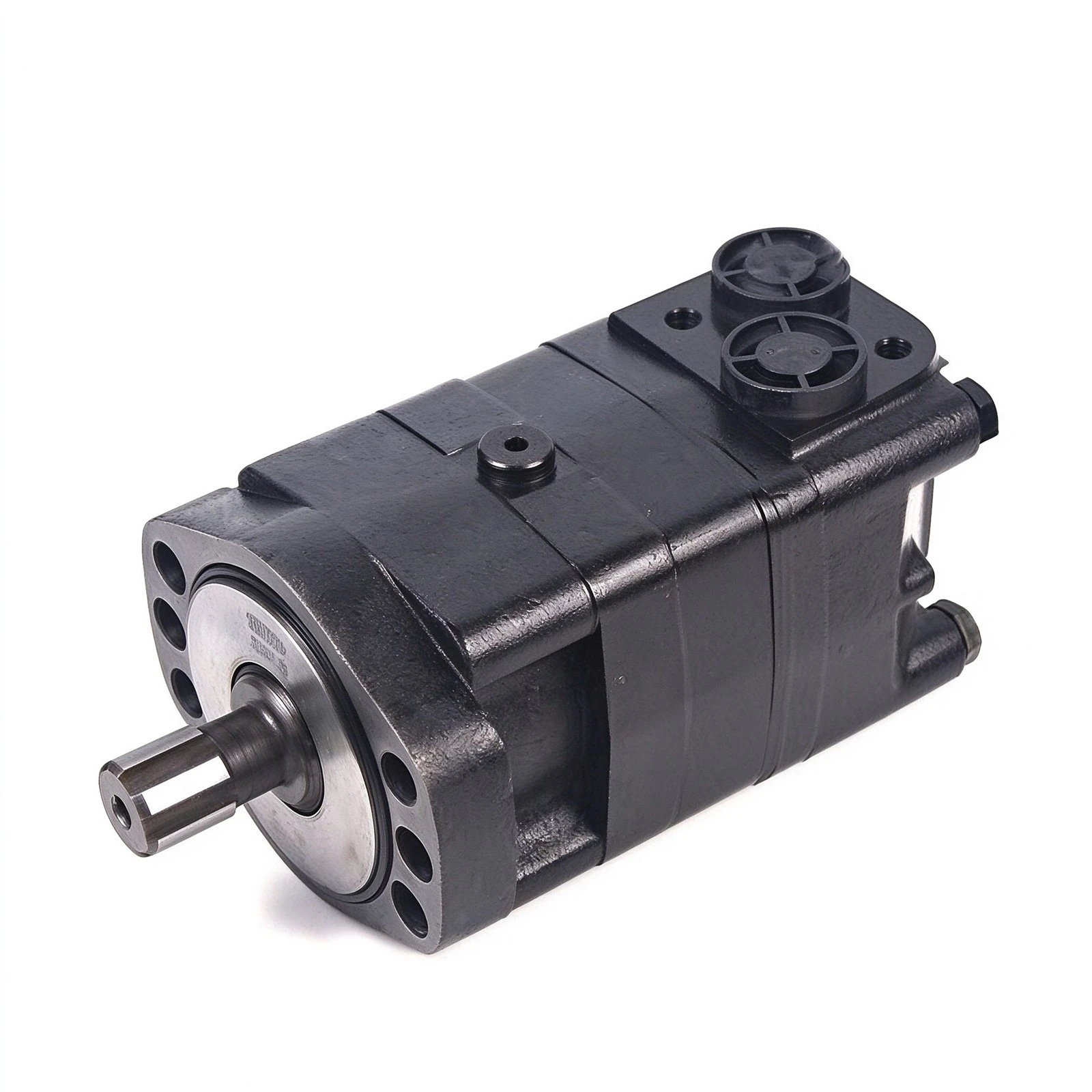
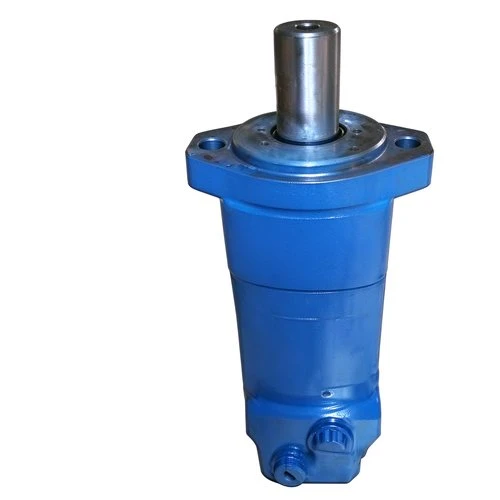
This [OMS-series orbital motor]
handles the low-RPM, high-torque side of hydraulic systems - the same principles apply: speed, load, and fluid condition all determine how much noise you'll hear.
Brand-Specific Noise Signatures
Different pump families sound different when they're under stress:
Rexroth A10VSO / A11VO: Generally the quietest in their class thanks to notched valve plate design. Noise increase with RPM is gradual and expected.
Kawasaki K3V / K5V: Common on Kobelco, Sany, and other excavators. These are heavy-duty pumps - expect a noticeable whine at high RPM. Worn K3V units develop a deep growl rather than a high whine.
Komatsu HPV / PC series: HPV-equipped PC200/PC300 pumps are relatively quiet from the factory. Rising noise usually indicates wear in the ball guide or valve plate rather than a speed issue.
Hitachi HPV091: Found on Zaxis 200/230 excavators. High-RPM whine is normal; a rattling noise at idle points to cavitation or a fouled suction filter.
Sauer PV90R: Closed-circuit pump used in skid steers and sweepers. Lower-RPM operation under load can be noisier due to the bent-axis design.
Linde HPR / HMF: High-efficiency pumps, moderately quiet. Noise rises sharply only when the pump is worn or operating above its rated speed range.
Nachi PVD / Uchida AP2D: Small excavator pumps. These run at relatively high RPM from the factory, so a sudden increase usually means pump wear, not an operating-speed problem.
FAQ
Does changing pump speed affect hydraulic flow? Yes. Flow = displacement × RPM × volumetric efficiency. To keep flow constant while reducing RPM, you need a variable displacement pump that increases stroke. On a fixed pump, slowing the shaft directly reduces output flow.
What's the normal noise level for an axial piston pump? Most industrial axial piston pumps run between 75–85 dB(A) at 1 meter, measured at rated pressure and speed. Mobile pumps in excavators typically read 85–95 dB(A) at the operator's ear. A jump of more than 5–8 dB from baseline usually indicates a problem.
Is a loud hydraulic pump dangerous? Not immediately, but cavitation and resonance noise damage components over time. Cavitation erodes valve plates and pistons; resonant vibration accelerates bearing fatigue. A pump that has gotten noticeably louder should be inspected, not ignored.
Can I just slow my pump down to make it quieter? Only if your system can tolerate reduced flow. If you need the same cycle time and lifting speed, you'll need to increase displacement or change to a larger pump with lower RPM capability. Slowing down under heavy load can paradoxically increase noise.
Conclusion
Pump noise at high RPM isn't a single problem - it's four overlapping mechanisms: pulsation frequency, pressure spike magnitude, cavitation, and mechanical resonance. The fix depends on which one is dominant in your application.
Start by measuring noise at multiple RPM points under your actual load. If the noise rises smoothly with speed, it's likely pulsation - add a dampener or retune displacement. If there's a sharp jump at a specific RPM, you're hitting resonance. If the noise is a rattling crackle, suspect cavitation and check your suction path.
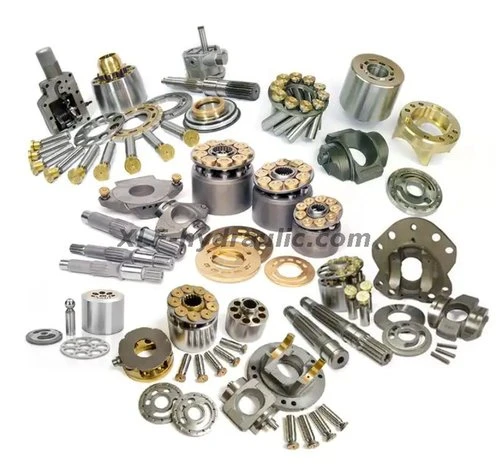
We work with Rexroth, Kawasaki, Komatsu, Hitachi, Vickers, Parker, Sauer, Linde, Nachi, and Uchida pump series daily. If your pump is louder than it should be, or you're specifying a new pump and need to budget for noise control, send us the details - we'll help you match the right pump and speed range to your application.