Hey there! If you're in the market for a hydraulic pump, you've come to the right place. I'm a hydraulic pump supplier, and I've been in the game for quite a while. In this blog post, I'll share some tips on how to choose the right hydraulic pump for your needs.
Know Your Application
First things first, you need to know what you're going to use the hydraulic pump for. Different applications have different requirements, and understanding these can greatly impact your choice. For example, if you're looking at a mining operation, you'll need a pump that can handle high pressure and continuous operation. On the other hand, if it's for a small agricultural machine, you might not need as much power.
Consider the Pressure and Flow Rate
Pressure and flow rate are two of the most important factors when choosing a hydraulic pump. The pressure is measured in pounds per square inch (psi) and tells you how much force the pump can generate. The flow rate, usually measured in gallons per minute (gpm), indicates how much fluid the pump can move.
You'll need to match these specs to your application. If you're powering a large industrial press, you'll likely need a pump with a high pressure rating. If you're using it for a system that requires a constant, slow flow of fluid, then a lower flow rate pump might be sufficient.
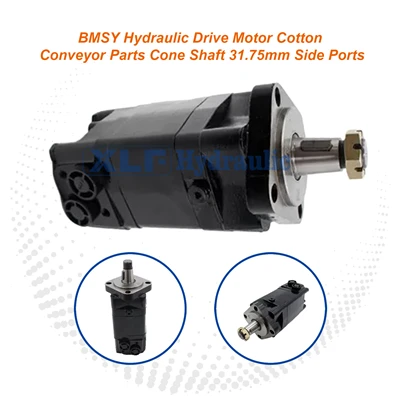
Let's say you're interested in some specific models. We offer a BMSY Hydraulic Drive Motor For Cotton Conveyors – 31.75mm Cone Shaft Side Ports which is great for cotton conveyor systems. It's designed to provide a steady flow and can handle the specific demands of such applications.
Evaluate the Pump Type
There are several types of hydraulic pumps, each with its own advantages and disadvantages.
- Gear Pumps: These are simple and affordable. They work well in applications that don't require extremely high pressure. Gear pumps are often used in small mobile equipment and some industrial applications where cost is a major factor.
- Vane Pumps: They are more efficient than gear pumps and can handle higher pressures. Vane pumps are commonly found in power steering systems and some industrial machinery.
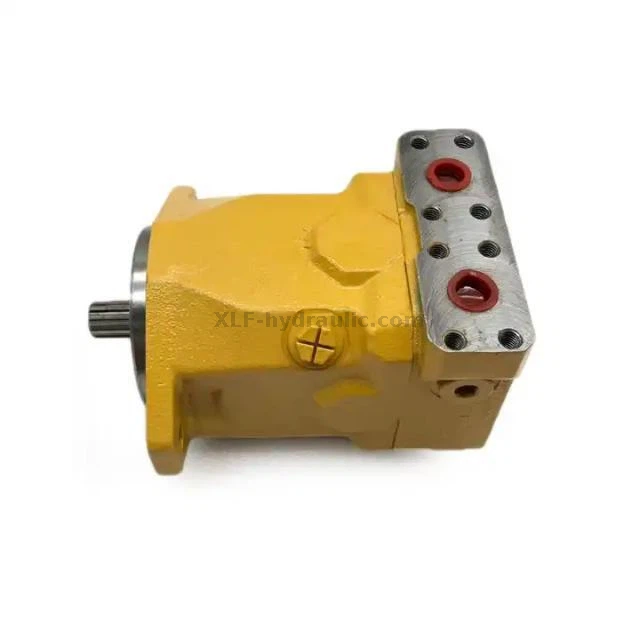
- Piston Pumps: Piston pumps are the most powerful and can handle the highest pressures. They are often used in heavy-duty applications such as large construction equipment and high-pressure industrial processes. For instance, our CAT 255 - 6805 Piston Type Hydraulic Motor 2556805 Axial Hydraulic Motor is a great example of a high - performance piston pump for demanding applications.
Check the Efficiency
Efficiency is crucial when it comes to hydraulic pumps. A more efficient pump will use less energy, which can save you money in the long run. There are two main types of efficiency to consider: volumetric efficiency and mechanical efficiency.
Volumetric efficiency refers to how well the pump can move fluid. A pump with high volumetric efficiency will deliver closer to its rated flow rate. Mechanical efficiency is about how well the pump converts mechanical energy into hydraulic energy.
Look at the Construction and Reliability
The construction of the pump matters a lot. You want a pump that's made of high - quality materials and has a robust design. A well - built pump will be more reliable and have a longer service life.
Check for things like the quality of the seals, the durability of the housing, and the type of bearings used. These components play a big role in the pump's performance and reliability. We also have products like the Gft 110 T3 9111 Gearbox For Atlas Copco PV275 PV271 Rock Drill Pit Viper, which are known for their solid construction and reliability in tough environments.
Think about Maintenance
All hydraulic pumps require some level of maintenance. Some pumps are easier to maintain than others. Look for pumps that have easily accessible parts, and where maintenance procedures are simple.
A pump with a good maintenance record can save you a lot of time and money in the long run. For example, if you need parts for a rock drill, our Ingersoll Rand & Furukawa Hydraulic Motor Char - Lynn 2000 Series 104 - 1842 - 006 Rock Drill Parts are designed to be easily replaced when needed, making maintenance a breeze.
Review the Cost
Cost is always a factor. You need to balance the initial cost of the pump with its long - term performance and efficiency. A cheaper pump might save you money upfront, but if it breaks down often or is inefficient, it could end up costing you more over time.
On the other hand, an expensive high - end pump might be overkill for a simple application. So, consider your budget and the overall value that the pump offers. For those on a budget but still need reliable performance, we have options like the Eaton 104 - 3155 - 006 Bobcat Hydraulic Drive Motor 2 Bolt Flange For Brush Cutters & Mowers, which provides good value for money.
Seek Expert Advice
If you're still not sure which pump to choose, don't hesitate to seek expert advice. As a hydraulic pump supplier, I'm here to help. You can reach out with your specific requirements, and I'll do my best to recommend the right pump for you.
In conclusion, choosing the right hydraulic pump requires careful consideration of your application, pressure and flow rate needs, pump type, efficiency, construction, maintenance, and cost. By taking the time to evaluate these factors, you can ensure that you get a pump that meets your needs and provides reliable performance.

If you're interested in purchasing a hydraulic pump or have any questions about our products, feel free to start a conversation with us. I'm always here to assist you in finding the perfect solution for your hydraulic needs.
References
- "Hydraulic Systems and Components" by Donald R. Pensky.
- "Fluid Power: Principles and Applications" by Peter Watson.