Hey there! As a supplier of monoblock control valves, I often get asked about the stability of these valves under different loads. It's a super important topic, especially for businesses and industries that rely on these valves for smooth operations. So, let's dive right into it.
First off, what are monoblock control valves? Well, they're basically single - piece valves that are designed to control the flow of hydraulic fluid. They're used in various applications, from construction equipment to agricultural machinery. And the stability of these valves is crucial because it directly affects how well the equipment works.
When we talk about stability under different loads, we're looking at how the valve behaves when it's dealing with various levels of pressure and flow. Let's start with low - load situations. When the load on a monoblock control valve is low, the valve is usually quite stable. The internal components, like the spools, can move smoothly without much resistance. This is because the pressure differences are relatively small, and the valve can actuate and control the fluid flow with ease.
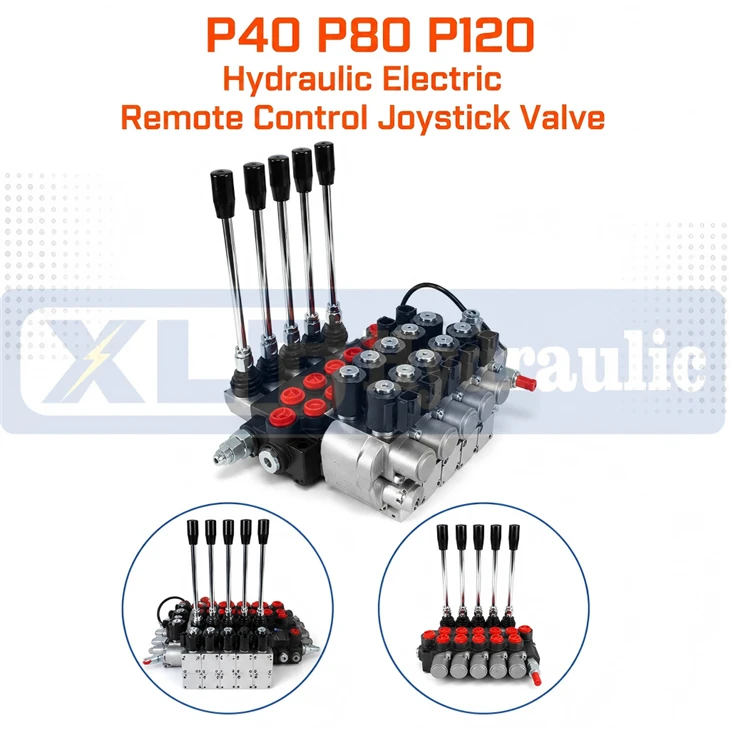
For example, in some light - duty agricultural machinery where the hydraulic system doesn't need to handle a lot of pressure, a monoblock control valve can provide stable performance. It can accurately control the speed and direction of the hydraulic cylinders, which is essential for tasks like lifting small loads or operating simple implements. One such valve that works well in low - load scenarios is the P40 P80 P120 Hydraulic Electric Remote Control Joystick Valve. It's designed to offer precise control even under relatively light pressures.
But what happens when the load increases? As the load on the valve goes up, the pressure inside the system rises. This can put more stress on the valve components. The spools, for instance, have to move against higher hydraulic forces. If the valve isn't designed properly, it might start to experience instability. There could be issues like jerky movements, inconsistent flow, or even leakage.
However, modern monoblock control valves are engineered to handle medium loads quite well. They're built with high - quality materials and advanced internal designs. Take the ZT - L12 Series Electric and Pneumatic Double Acting Spool Valve For Agricultural Machinery. This series is designed to withstand medium - level pressures and still maintain stability. The valve's internal passages are optimized to reduce pressure drops and ensure a smooth flow of fluid, even when the load is significant.
Now, let's consider high - load situations. These are the toughest scenarios for monoblock control valves. In applications like large construction equipment or heavy - duty industrial machinery, the valves have to deal with extremely high pressures. The stability of the valve becomes a real challenge here.
At high loads, the valve needs to be able to handle the large forces without any significant wear or failure. The sealing mechanisms have to be top - notch to prevent leakage, and the spool movement has to be precise. Our ZT - L20 Series Electric and Pneumatic Double Acting Hydraulic Valve is a great example of a valve that can handle high loads. It's constructed with heavy - duty materials and has a robust design that can withstand the intense pressures associated with high - load operations.
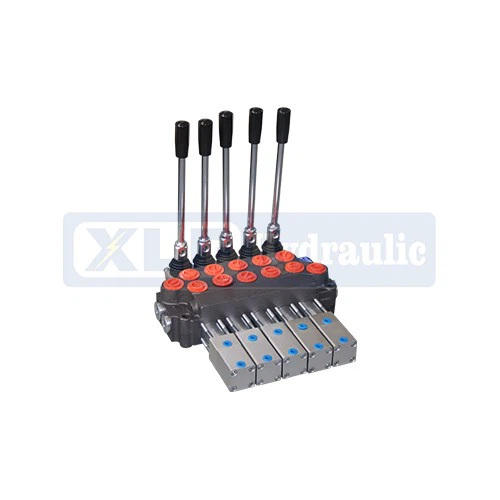
Another factor that affects the stability of monoblock control valves under different loads is the type of control mechanism. There are manual, hydraulic, and electric control options. Manual control valves rely on an operator to adjust the spool position. While they can be quite stable for simple applications with predictable loads, they might not be the best choice for high - load or complex operations.
Hydraulic control valves use hydraulic pressure to move the spools. They can offer good stability, especially when the hydraulic system is properly designed. The pressure from the hydraulic system can be adjusted to balance the load on the valve, which helps in maintaining a stable operation. Electric control valves, on the other hand, are becoming more and more popular. They can provide precise control, even under varying loads. The SQZD - L15 Series Pneumatic Hydraulic Directional Control 3 Spool Valve Monoblock uses a combination of pneumatic and hydraulic control, offering a high level of stability across different load ranges.
In addition to load and control mechanism, the design of the valve's internal passages also plays a big role in stability. Well - designed passages can reduce turbulence and pressure fluctuations, which are major causes of instability. For example, the HM3 Series Monoblock Hydraulic Hydraulic Flow Diverter Valve For Wheel Loaders has an optimized internal passage design. This allows it to distribute the hydraulic fluid evenly, even when the loader is working under different loads.
To sum it up, the stability of monoblock control valves under different loads depends on a variety of factors. From the load level itself to the control mechanism and internal design, every aspect matters. As a supplier, we're constantly working on improving our valves to ensure they offer the best stability possible.
If you're in the market for monoblock control valves and want to learn more about how they'll perform under your specific loads, don't hesitate to reach out. We're here to help you find the right valve for your needs. Whether you're dealing with low - load, medium - load, or high - load applications, we've got the solutions. Let's have a chat and see how we can work together to get you the most stable and efficient monoblock control valves.
References
- Fluid Power Basics: A Guide to Hydraulics and Pneumatics, by Eaton Corporation
- Hydraulic Control Systems by Geary Johnson