Propeller vanes are an essential component of watercraft, playing a crucial role in the vessel's propulsion system. As a propeller vane supplier, I have had the privilege of witnessing firsthand the intricate workings of these remarkable devices. In this blog post, I will delve into the science behind propeller vanes, exploring how they generate thrust and contribute to the overall performance of watercraft.
The Basics of Propeller Vane Function
At the heart of a propeller vane is the principle of fluid dynamics. When a propeller rotates in water, the vanes, also known as blades, interact with the surrounding fluid to create a pressure difference. This pressure difference results in a force that propels the watercraft forward. The shape and design of the propeller vanes are carefully engineered to optimize this process, ensuring maximum efficiency and performance.
The most common type of propeller vane design is the helical shape. This shape allows the vanes to slice through the water in a smooth, continuous motion, minimizing turbulence and drag. As the propeller rotates, the vanes push the water backward, creating a reaction force that propels the watercraft forward according to Newton's third law of motion, which states that for every action, there is an equal and opposite reaction.
Factors Affecting Propeller Vane Performance
Several factors can influence the performance of propeller vanes. One of the most important factors is the pitch of the vanes. The pitch refers to the distance the propeller would move forward in one revolution if it were moving through a solid medium. A higher pitch generally results in greater speed but may require more power to turn. Conversely, a lower pitch provides more thrust at lower speeds but may limit the maximum speed of the watercraft.
The number of vanes on a propeller also plays a significant role in its performance. Propellers typically have between two and six vanes, with each configuration offering different advantages. A propeller with fewer vanes generally has less drag and can achieve higher speeds, but it may also be less efficient at low speeds and produce more vibration. On the other hand, a propeller with more vanes provides better thrust and smoother operation at low speeds but may be more prone to cavitation, a phenomenon that occurs when the pressure around the vanes drops below the vapor pressure of the water, causing the formation of bubbles.
Another factor that affects propeller vane performance is the diameter of the propeller. A larger diameter propeller can move more water and generate more thrust, but it may also require more power to turn. Additionally, the size of the watercraft and its intended use will also influence the optimal propeller diameter. For example, a large commercial vessel may require a much larger propeller than a small recreational boat.


Advanced Propeller Vane Technologies
In recent years, there have been significant advancements in propeller vane technology aimed at improving efficiency, reducing noise, and enhancing overall performance. One such advancement is the use of composite materials in propeller vane construction. Composite materials, such as carbon fiber and fiberglass, offer several advantages over traditional materials, including reduced weight, increased strength, and improved corrosion resistance. These materials also allow for more complex and precise vane designs, which can further optimize performance.
Another emerging technology is the use of variable pitch propellers. Unlike traditional fixed-pitch propellers, variable pitch propellers allow the pitch of the vanes to be adjusted while the propeller is in operation. This feature provides greater flexibility and efficiency, as the propeller can be optimized for different operating conditions, such as cruising, acceleration, or maneuvering. Variable pitch propellers are commonly used in large commercial vessels and high-performance boats.
Applications of Propeller Vanes in Different Types of Watercraft
Propeller vanes are used in a wide range of watercraft, from small recreational boats to large commercial vessels. In small boats, such as fishing boats and pleasure crafts, propeller vanes are typically designed for efficiency and maneuverability. These propellers often have a lower pitch and fewer vanes, allowing for quick acceleration and easy handling.
In larger commercial vessels, such as cargo ships and tankers, propeller vanes are designed to provide maximum thrust and efficiency over long distances. These propellers are usually larger in diameter and have more vanes, which helps to distribute the load evenly and reduce vibration. Additionally, commercial vessels may use advanced propeller technologies, such as variable pitch propellers and contra-rotating propellers, to further improve performance.
Related Hydraulic Pump Products
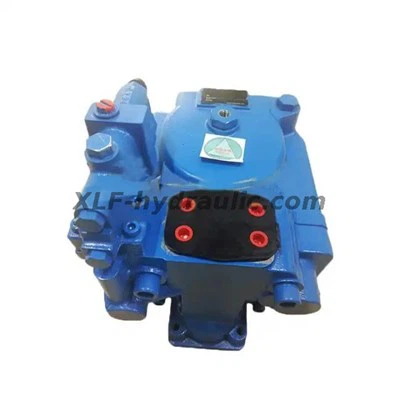
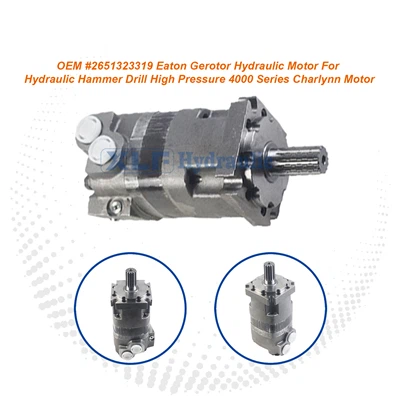
In addition to propeller vanes, our company also offers a range of high-quality hydraulic pumps for various industrial applications. For example, the Eaton Vickers PVXS Hydraulic Bent Axis Axial Piston Pump for Industrial Machinery is a reliable and efficient pump designed for heavy-duty industrial machinery. Another product is the Hydraulic Polyhydron Piston Pump 190 2279 For CAT Truck 784C, which is specifically designed for use in CAT trucks. We also offer the HG Series Hydaraulic Triplex Plunger Pumps for Crawler Bulldozers, which are ideal for crawler bulldozers and other heavy equipment.
Contact Us for Propeller Vane and Hydraulic Pump Purchases
If you are in the market for high-quality propeller vanes or hydraulic pumps, we invite you to contact us for more information. Our team of experts is dedicated to providing the best products and services to meet your specific needs. Whether you are a small boat owner or a large industrial operator, we have the solutions you need to keep your watercraft or machinery running smoothly.
References
- McCormick, M. E. (1969). "Hydrodynamics of Ship Propulsion." Dover Publications.
- Breslin, J. P., & Andersen, P. (1994). "Hydrodynamics of Ship Propellers." Cambridge University Press.
- Carlton, J. S. (2007). "Marine Propellers and Propulsion." Butterworth-Heinemann.