



Parker PV063 Hydraulic Swash Plate Type Axial Piston Pump Parts
Model: P2060
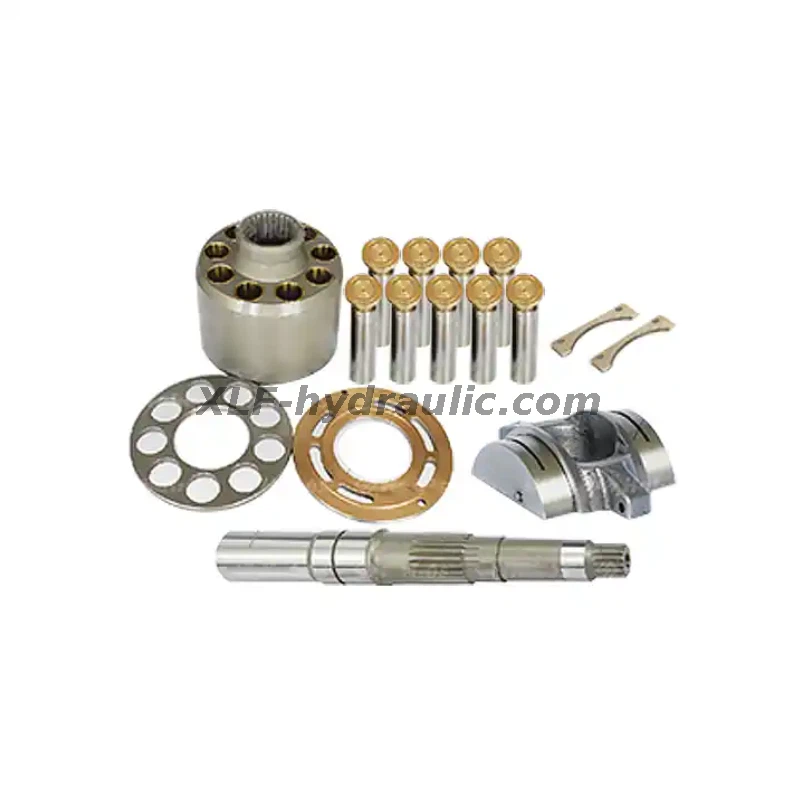
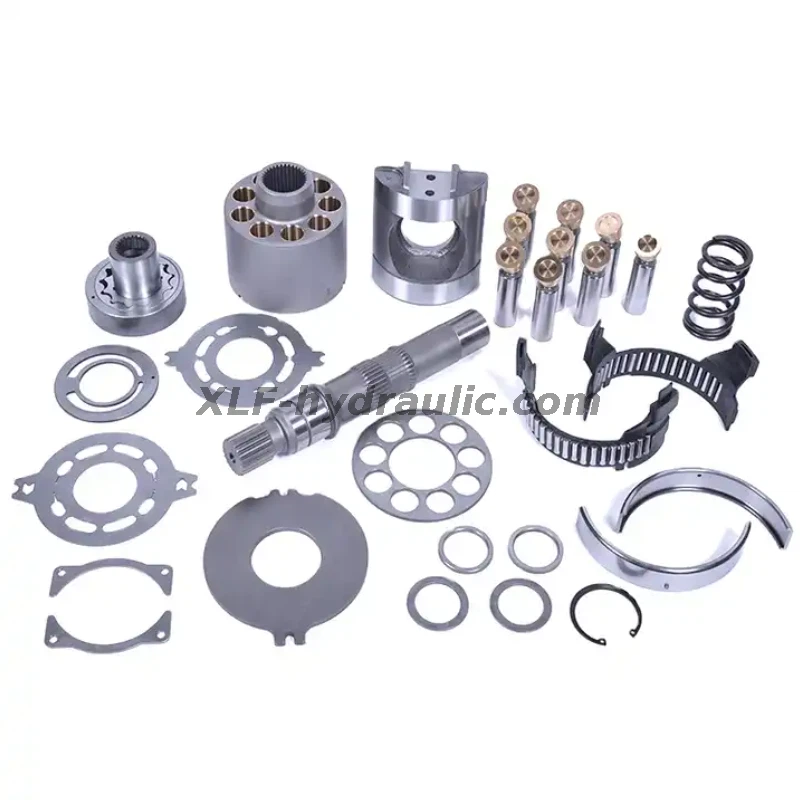
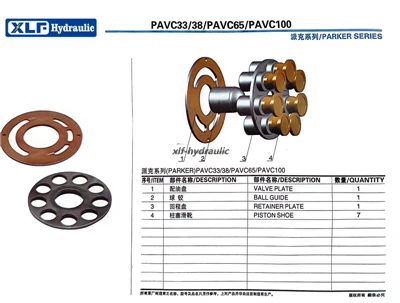
PISTON SHOE
CYLINDER BLOCK
VALVE PLATE L, VALVE PLATE R, VALVE PLATE M
RETAINER PLATE
BALL GUIDE
DRIVE SHAFT
THRUST PLATE
BLOCK SPRING
BEARING PLATE
SHAFT SEAL ASSEMBLY
SEAL KIT
Application: For Engineering Machinery
Country Of Origin: China
Package:Carton
MOQ:one piece
Delivery Time: Within 5 Working Days After Received the Payment.
Payment Term:T/T,Western Union,PayPal,Alibaba
Wuhan Xinlaifu Hydraulic Equipment Co., Ltd. is one of the leading manufacturers and suppliers of parker pv063 hydraulic swash plate type axial piston pump parts in China. With abundant experience, we warmly welcome you to buy high quality customized products at competitive price from our factory. Also, OEM&ODM service is available.
Parker PV063 Hydraulic Swash Plate Type Axial Piston Pump Parts
Core repair and maintenance guarantee for Parker PV063 pumps
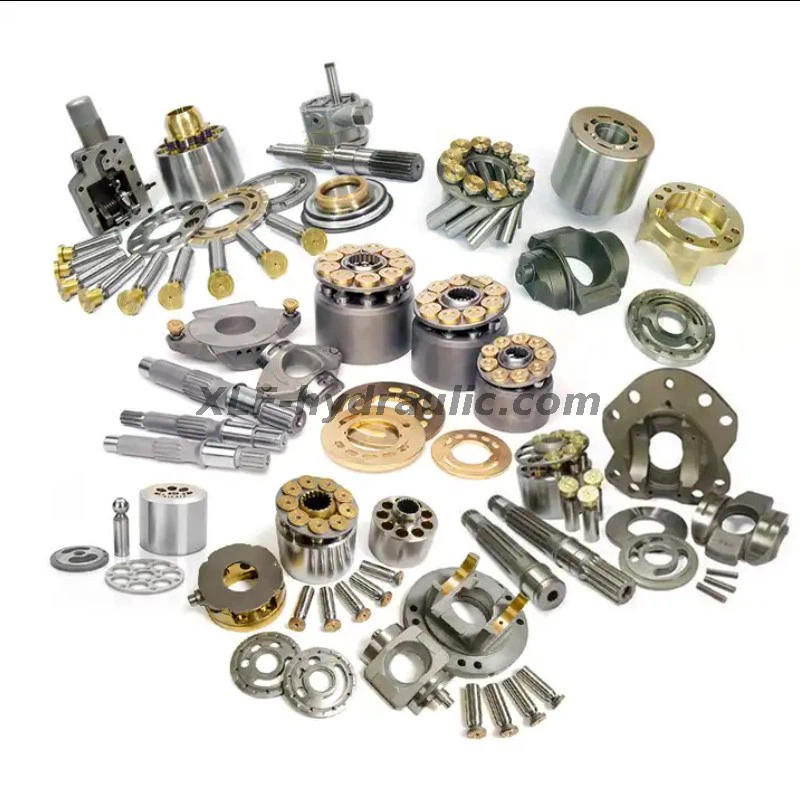
The Parker PV063 swash plate axial piston pump is the "power mainstay" in industrial hydraulic systems and is widely used in injection molding machines, metallurgical equipment, heavy machine tools and other fields. Its swash plate structure can achieve efficient power output under high pressure. After long-term operation, the core components of the pump body such as the plunger and the distribution plate are prone to wear, resulting in pressure attenuation and unstable flow. And Parker PV063 Hydraulic Swash Plate Type Axial Piston Pump Parts as specialized spare parts It is precisely the key to solving such problems - through the precise replacement of parker pv063 hydraulic spare, the performance of the pump body can be restored quickly, avoiding the cost waste caused by the replacement of the entire pump.
Whether it is for dealing with sudden fault repairs or conducting preventive maintenance, this set of spare parts can meet the demands. Among them, parker pv063 hydraulic repair spare covers the vulnerable core components of the pump body. From material to size, it strictly complies with the original factory standards of Parker to ensure that the operating parameters (such as volumetric efficiency and pressure stability) of the repaired pump body are consistent with those of the new machine.
Core spare parts advantages: Original factory-level precision and repair value
Precise adaptation, performance recovery
Each component of parker pv063 hydraulic spare is precisely machined: the fit clearance between the plunger and the cylinder bore is controlled within 0.002-0.004mm, and the surface roughness of the swash plate is as low as Ra 0.01μm, fully matching the original factory structural design of the PV063 pump. This high precision enables the repaired pump body to stably withstand a rated working pressure of 315bar. Under high-pressure conditions such as mold locking in injection molding machines and rolling in metallurgical equipment, the flow output error can be controlled within ±1%, avoiding power loss caused by poor component matching.
The key friction pairs in parker pv063 hydraulic repair spare (such as plunger - slipper, distribution disc - cylinder block) adopt the wear-resistant coating technology consistent with the original factory, and the surface hardness reaches more than HV 800. In a continuously operating hydraulic system, the wear rate of these components is 40% lower than that of ordinary spare parts, which can effectively extend the secondary service life of the pump body. After testing, the PV063 pump repaired with this spare part has an average mean time between failures of over 8,000 hours, approaching the level of a new machine.
Efficient maintenance and cost optimization
Compared with replacing the entire pump, using parker pv063 hydraulic repair spare for partial maintenance can save 50%-70% of the cost. For instance, when the PV063 pump experiences internal leakage due to the wear of the distribution plate, the problem can be solved simply by replacing the distribution plate in the kit, without the need to scrap the pump body. If the sealing parts age and cause oil leakage, replacing the sealing kit can restore the sealing performance. This "targeted repair" mode is particularly suitable for the maintenance scenarios of batch devices.
Meanwhile, the modular design of parker pv063 hydraulic spare simplifies the maintenance process: components come with clear installation labels and, in combination with the assembly manual, skilled technicians can complete the replacement of core components within 3 hours. For production lines that rely on PV063 pumps for operation (such as automotive parts stamping lines), it can significantly reduce downtime and minimize capacity losses caused by idle equipment.
Product Description

Parker plunger pump: PV016R1L1T1NFDS, PV016R1K1T1NELB, PV016R1K1T1NECC
PV016R1K1T1NFFD, PV016R1K1T1NFRC, PV016R9K1T1NFHS
Parker oil pump plunger pump: PV020R1K1T1NBLC, PV020R1K1T1NFR1, PV020R1K1T1NFWS
PV020R1K1T1NFHS, PV020R1K1T1NFRL, PV020L1K1T1NFWS
Parker PV Series Pump User Manual
1. Hydraulic oil
It is recommended to use high-quality mineral oil-based hydraulic fluids, such as H-LP fluids that comply with Part 2 of DIN 51524 standard. At 50 ° C, the viscosity should be 25 to 50mm '/S, with a temperature range of -10 to 70 ° C. For other fluids such as phosphates, further investigation is required.
2. Performance seal
Using mineral oil-based hydraulic oil as the working medium, standard nitrile rubber seals are used. For fluids like phosphoric acid, carbon fluorine seals must be used
3. Filtering and tubing configuration
If the cleanliness of the oil meets the specified purity level (such as 150 4406) through highly effective filtration, the reliability and service life of the pump and other components will be improved to varying degrees. The filter element should comply with IS. Standard quality requirements.
The minimum requirement for filtration accuracy X (Mm) is to ensure the functional reliability of general hydraulic equipment:
Grade 19/15, according to ISO 4406 standard.
X=25pm (p25 ^ 75) according to ISO4572 standard.
⑵ Ensure that the equipment has high functional reliability and long component lifespan:
Grade 16/13. According to ISO 4406 standard.
X=10 | jm (01ON75) according to ISO 4572 standard.
It is recommended to use return oil filters or pressure oil filters produced for different usage scenarios and installation methods. Oil suction filters should be avoided as much as possible, especially for pumps with fast response. Oil suction □ can use a 100 mesh (149 ^ m) filter. The filter size must be more than twice the suction port. To achieve the best filtration effect, bypass filtration is the best choice.
For an overview of PV series materials, please refer to the article "Parker Parker PV Plunger Pump"; You can also refer to "Parker PV016-PV360 Variable Controller" to learn more about the PV series control details. (Note: Parker PV016-PV360 and PV series variable control methods are basically the same, which can be used as a collaborative reference)
Parker oil pump plunger pump: PV023R1E1T1NGLC, PV023R1K8T1VFHS, PV023R1K1A1NFWS
PV023R1L1T1NFRC, PV023R1L1T1NCLC, PV023R1K1T1NBCC
PV023R1K1T1NFPV
Installation and assembly of Parker PV series pumps
Horizontal installation:
The oil suction port and pressure oil port are on the side. The leaking oil is facing upwards, or when the shaft is rotated 90 degrees, the pressure oil is facing upwards, and the oil suction port is facing downwards. Jue Zhen cannot turn the other way around, as oil leaks must always be located at the highest possible position on the tongue.
Vertical installation: The shaft is facing upwards.
Import (oil suction end)
The affinity oil suction pipeline should be set in such a way that the vacuum does not exceed 0.8 bar (absolute). The oil suction pipeline should be as short and straight as possible. When the pump is installed on the oil tank, the suction port should be cut at 45 degrees to improve the suction conditions. Pay attention to absolute sealing. Air entering the oil suction pipeline can cause cavitation, noise, and damage to the pump.
4. Transmission
The pump shaft and motor shaft must be coaxial within a tolerance range of 0.25 mm T I.R •, with a maximum allowable angle error of less than 0.2 degrees. Rotary flexible couplings with clearance error compensation and angle error compensation should be used. The installation regulations of the coupling manufacturer must be followed.
When the transmission causes radial load on the pump shaft, it is necessary to consult with the manufacturer. The axial load on the pump shaft is not allowed Q
5. Start
During the first trial run, the pump (through the leakage pipeline) should be filled with oil. When starting for the first time, the system operates in a pressure free state to quickly charge oil and exhaust the pump and pipelines. When all the air is emptied, pressure is established.
Short term shutdown facilitates exhaust and allows the pump to quickly charge oil. (Attention: Check the rotation direction of the motor.) 6. Working noise
The measurement of pump and normal working noise, as well as the working noise of hydraulic transmission systems, is related to where and how the pump and the entire transmission system are installed. The form, size, and structure of pipeline connections often cause excessive noise.
The connection form and structure between the pump and motor often cause undesired high noise, even if limited by installation space. Corresponding measures and structural components should be taken during installation to achieve the best effect of reducing working noise.
Parker oil pump plunger pump: PV032R1K1A1VFDS, PV032L1E3C1NFWS, PV032R1K1T1NELB
PV032L1K1T1NFWS, PV032R1K1B1NFDS, PV032RAK1T1NFPV
PV032R1L1B1NFWS, PV032R1K1T1NFPG
PV040L1L1T1NFWS, PV040R1K1T1NFR1, PV040R1K1T1NKLA
PV040R1K1T1NMLC, PV040R1D1T1NGCC, PV040R1K1T1NELA
PV040R1K1A1NHCC
Parker PV series pumps reduce working noise
The structural components can prevent the vibration of the pump from being transmitted to other components through elastic connections, and can also avoid the intensification of pump vibration. For example:
The bracket of the Sichuan pump adopts a damping flange with a vulcanized labyrinth seal. one
⑵ Rotational elasticity: Coupling. ②
(3) Shock absorber bracket 3: or the flange of the foot bracket used for installing the motor's graphic bracket or pump bracket.
(4) The inlet, outlet, and leakage port of the pump are connected by flexible pipelines (hoses).
Only the oil inlet pipeline is connected with airtight hard pipes.
Pipeline connections should use the largest possible cross-section and corresponding connection threads or flanges C
Parker oil pump plunger pump: PV046R1D1T1NFWS, PV046R1D3T1NFFC, PV046R1K1A1NFPV
PV046L1K1A1NFHS, PV046R1K1T1NFDS, PV046R1K1B1NFDS
PV046R1D1T1NHCC
Parker oil pump plunger pump: PV063R1K1A1VFPR, PV063R1K1C1NFWS, PV063R2K1T1N001
PV063R9L1T1NFWS, PV063R1K1A1NFHS, PV063R1K1T1NFFP
PV063R1K1T1NFPR, PV063R1K1T1NGLC
Parker oil pump plunger pump: PV080L1K1T1NFFC, PV080R1K1B1NSLB, PV080L1K1T1NFHS
7. The leaking oil pipeline must be directly and without throttling introduced into the fuel tank. Cannot be connected to other return oil pipelines. The end of the oil leakage pipeline must be below the minimum liquid level of the oil tank and the disc may be far away from the oil suction port. This can ensure that the internal oil of the pump body will not be emptied and the hot oil mixed with air will not circulate again in the parked state. For the same reason, when installing the pump inside the oil tank, the installation of the oil leakage pipeline should also ensure the generation of siphon. To ensure that the pump casing can be filled with oil, select and select a direct speed low-pressure joint with the largest diameter. Shell - (leaking oil) - pressure should not exceed the maximum length of the lbaro pipeline of 2000mm, and the minimum straight
The diameter should match the interface size and use low-pressure threaded connections.
Hot Tags: parker pv063 hydraulic swash plate type axial piston pump parts, China parker pv063 hydraulic swash plate type axial piston pump parts manufacturers, suppliers, parker pavc hydraulic repair spare, parker p3 hydraulic spare, radial piston air motor, piston metering pump, Parker Hydraulic SH5V63 parts, parker f12 hydraulic motor spare
You Might Also Like

Send Inquiry