Hey there! As a twin piston pump supplier, I've seen firsthand how crucial it is to pick the right pump for a specific application. It's not just about getting the job done; it's about getting it done efficiently, effectively, and without a whole lot of headaches. So, let's dive into how you can choose the perfect twin piston pump for your needs.
Understanding Your Application
The first step in choosing the right twin piston pump is to have a clear understanding of your application. What are you using the pump for? Is it for transferring fluids, like in a chemical processing plant? Or maybe it's for hydraulic power in a construction machine? Different applications have different requirements, and you need to know what yours are.
For example, if you're dealing with abrasive fluids, you'll need a pump that can handle that kind of wear and tear. On the other hand, if you're looking for high-pressure applications, the pump's pressure rating becomes a critical factor. Think about the flow rate you need as well. How much fluid do you need to move in a given amount of time? This will help you narrow down your options.
Flow Rate and Pressure
Flow rate and pressure are two of the most important factors when choosing a twin piston pump. The flow rate is measured in gallons per minute (GPM) or liters per minute (LPM), and it tells you how much fluid the pump can move. The pressure, measured in pounds per square inch (PSI) or bars, indicates the force with which the pump can push the fluid.
You need to match the pump's flow rate and pressure capabilities to your application. If you choose a pump with a flow rate that's too low, it won't be able to keep up with your needs. And if the pressure is too low, the fluid might not reach where it needs to go. On the flip side, if you go for a pump with a much higher flow rate and pressure than you need, you'll end up wasting energy and money.
Let's say you're using a pump for a small-scale agricultural irrigation system. You probably don't need a pump with an extremely high flow rate or pressure. But if you're working on a large industrial project, like a mining operation, you'll need a pump that can handle high flow rates and pressures.
Fluid Compatibility
Another crucial aspect is fluid compatibility. Different pumps are designed to work with different types of fluids. Some fluids are corrosive, some are viscous, and some are abrasive. You need to make sure the pump you choose can handle the specific fluid you're working with.
For instance, if you're pumping a corrosive chemical, you'll need a pump made from materials that are resistant to corrosion, like stainless steel or certain types of plastics. If the fluid is highly viscous, the pump needs to be able to handle the thicker consistency without losing efficiency.
Pump Design and Construction
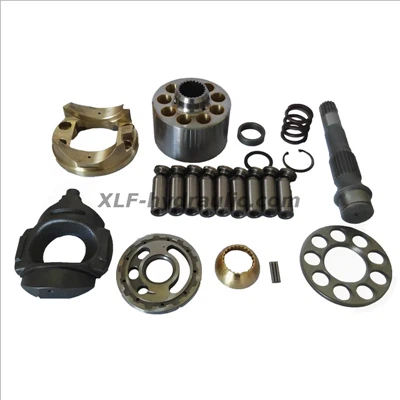
The design and construction of the twin piston pump also matter. There are different types of twin piston pumps, such as axial piston pumps and radial piston pumps. Each type has its own advantages and disadvantages, and the choice depends on your application.
Axial piston pumps are known for their high efficiency and compact design. They're often used in applications where space is limited and high performance is required. Radial piston pumps, on the other hand, are better suited for high-pressure applications and can handle more demanding operating conditions.
The quality of the pump's construction is also important. Look for pumps that are well-built and made from high-quality materials. A pump with a solid construction will last longer and require less maintenance.
Our Product Recommendations
As a twin piston pump supplier, we have a range of products that can meet different application needs. For example, the CAT 100 6239 PVH Hydraulic Piston Transfer Pump for Flat Shovel is a great choice for applications where you need a reliable hydraulic pump for flat shovels. It offers good flow rate and pressure capabilities, and it's built to last.
If you're working with a CAT truck 725, the Hydraulic Simple Piston Pump 172 9322 For CAT Truck 725 is a suitable option. It's designed to work specifically with this type of truck and provides the necessary hydraulic power.


And for CAT loaders 420D and 430D, the Hydraulic Vertical Piston Pump 244-2228 For CAT Loader 420D 430D is a great fit. It's engineered to deliver the right flow rate and pressure for these loaders.
Maintenance and Support
Don't forget about maintenance and support when choosing a twin piston pump. A pump that's easy to maintain will save you time and money in the long run. Look for pumps that have accessible parts and clear maintenance instructions.
It's also important to choose a supplier that offers good support. If you run into any problems with the pump, you want to be able to get help quickly. We're committed to providing excellent customer support and can assist you with any questions or issues you might have.
Making the Decision
Once you've considered all these factors, it's time to make a decision. Take your time to compare different pumps and their features. Look at the specifications, read reviews, and talk to other users if possible.
Remember, choosing the right twin piston pump is an investment. It's worth spending the time to get it right. If you're still not sure which pump is best for your application, don't hesitate to reach out to us. We're here to help you make the best choice.
Conclusion
Choosing the right twin piston pump for a specific application is a process that requires careful consideration. By understanding your application, considering factors like flow rate, pressure, fluid compatibility, pump design, and maintenance, you can make an informed decision. And if you're in the market for a twin piston pump, we have a range of products that can meet your needs. So, if you're ready to find the perfect pump for your project, get in touch with us, and let's start the conversation. We're looking forward to helping you with your twin piston pump needs.
References
- Hydraulic Pump Handbook, various authors
- Industrial Pump Selection Guide, industry publication