Axial piston pumps are a crucial component in many hydraulic systems, known for their high efficiency, reliability, and ability to handle high pressures. As a leading supplier of axial piston pumps, I have had the privilege of working closely with these remarkable machines and understanding their inner workings. In this blog post, I will delve into the key components of an axial piston pump, explaining their functions and importance in the overall operation of the pump.
1. Cylinder Block
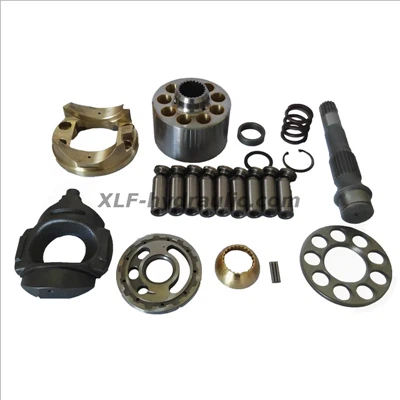
The cylinder block is the heart of the axial piston pump. It is a circular component with a series of cylinders arranged in a radial pattern around its center. Each cylinder houses a piston that moves back and forth within the cylinder bore. The cylinder block is typically made of high-strength materials such as steel or aluminum to withstand the high pressures and forces generated during operation.
The primary function of the cylinder block is to convert the rotational motion of the drive shaft into linear motion of the pistons. As the drive shaft rotates, it causes the cylinder block to rotate as well. The pistons are connected to a swashplate, which is an inclined plate that causes the pistons to move in and out of the cylinders as the cylinder block rotates. This reciprocating motion of the pistons creates a pumping action, drawing in hydraulic fluid from the inlet port and discharging it at high pressure through the outlet port.
2. Pistons
The pistons are the moving parts of the axial piston pump that directly interact with the hydraulic fluid. They are typically made of high-strength materials such as steel or ceramic to ensure durability and resistance to wear. The pistons are designed to fit precisely within the cylinder bores, creating a seal that prevents fluid leakage.
As the cylinder block rotates, the pistons move in and out of the cylinders in a reciprocating motion. When the piston moves out of the cylinder, it creates a vacuum that draws in hydraulic fluid from the inlet port. When the piston moves back into the cylinder, it compresses the fluid, increasing its pressure and forcing it out through the outlet port. The number of pistons in an axial piston pump can vary depending on the design and application, but most pumps have between 7 and 9 pistons.
3. Swashplate
The swashplate is a key component of the axial piston pump that controls the stroke length of the pistons. It is an inclined plate that is mounted at an angle to the axis of the drive shaft. As the cylinder block rotates, the pistons slide along the surface of the swashplate, causing them to move in and out of the cylinders.


The angle of the swashplate determines the stroke length of the pistons. A larger angle results in a longer stroke length, which means that the pistons displace more fluid per revolution of the drive shaft. This increases the flow rate and pressure of the pump. Conversely, a smaller angle results in a shorter stroke length, reducing the flow rate and pressure. The swashplate angle can be adjusted manually or automatically to control the output of the pump.
4. Valve Plate
The valve plate is a stationary component that is located between the cylinder block and the pump housing. It contains a series of ports and passages that control the flow of hydraulic fluid into and out of the cylinders. The valve plate is typically made of high-strength materials such as steel or cast iron to withstand the high pressures and forces generated during operation.
The valve plate has two main functions. First, it directs the flow of hydraulic fluid from the inlet port to the cylinders during the suction stroke. Second, it directs the flow of high-pressure fluid from the cylinders to the outlet port during the discharge stroke. The valve plate is designed to open and close at the appropriate times to ensure efficient and smooth operation of the pump.
5. Drive Shaft
The drive shaft is the component that transmits the rotational power from the prime mover (such as an electric motor or an engine) to the cylinder block. It is typically made of high-strength materials such as steel to withstand the high torque and forces generated during operation. The drive shaft is connected to the cylinder block through a spline or a coupling, ensuring a positive connection that allows for efficient power transmission.
The drive shaft rotates at a constant speed, which determines the speed of the cylinder block and the pistons. The speed of the drive shaft affects the flow rate and pressure of the pump. A higher speed results in a higher flow rate and pressure, while a lower speed results in a lower flow rate and pressure. The drive shaft is usually supported by bearings to reduce friction and ensure smooth operation.
6. Pump Housing
The pump housing is the outer casing that encloses all the internal components of the axial piston pump. It provides protection and support for the components, as well as a mounting surface for the pump. The pump housing is typically made of high-strength materials such as cast iron or aluminum to withstand the high pressures and forces generated during operation.
The pump housing has several functions. First, it provides a sealed environment for the hydraulic fluid, preventing leakage and contamination. Second, it dissipates heat generated during operation, ensuring that the pump operates within a safe temperature range. Third, it provides a mounting surface for the pump, allowing it to be easily installed and integrated into the hydraulic system.
7. Bearings
Bearings are used in axial piston pumps to support the rotating components and reduce friction. They are typically made of high-quality materials such as steel or ceramic to ensure durability and reliability. The bearings are located at various points in the pump, including the drive shaft, the cylinder block, and the swashplate.
The bearings play a crucial role in the smooth operation of the pump. They reduce friction and wear, which helps to extend the lifespan of the components. They also ensure that the rotating components are properly aligned, preventing misalignment and vibration. Regular maintenance and lubrication of the bearings are essential to ensure their optimal performance.
8. Seals
Seals are used in axial piston pumps to prevent hydraulic fluid leakage and contamination. They are typically made of elastomeric materials such as rubber or polyurethane to provide a flexible and reliable seal. The seals are located at various points in the pump, including the pistons, the valve plate, and the pump housing.
The seals play a critical role in the performance and reliability of the pump. They prevent fluid leakage, which can lead to reduced efficiency, increased energy consumption, and potential damage to the pump. They also prevent contamination of the hydraulic fluid, which can cause wear and damage to the internal components. Regular inspection and replacement of the seals are essential to ensure their proper functioning.
Conclusion
In conclusion, axial piston pumps are complex and sophisticated machines that rely on a number of key components to operate efficiently and reliably. The cylinder block, pistons, swashplate, valve plate, drive shaft, pump housing, bearings, and seals all play crucial roles in the overall operation of the pump. Understanding the functions and importance of these components is essential for anyone involved in the design, installation, maintenance, or repair of axial piston pumps.
As a leading supplier of axial piston pumps, we offer a wide range of high-quality pumps and components to meet the diverse needs of our customers. Our pumps are designed and manufactured to the highest standards of quality and reliability, ensuring optimal performance and long service life. If you are in the market for an axial piston pump or need assistance with your hydraulic system, please do not hesitate to [Contact us for procurement discussions]. We are here to help you find the right solution for your specific requirements.
References
- "Hydraulic Pumps and Motors" by Heinz P. Bloch
- "Fluid Power Engineering" by Anthony Esposito
- "Axial Piston Pumps: Design, Operation, and Maintenance" by Peter D. Wolf
For more information about our axial piston pumps, you can check out the following products: