



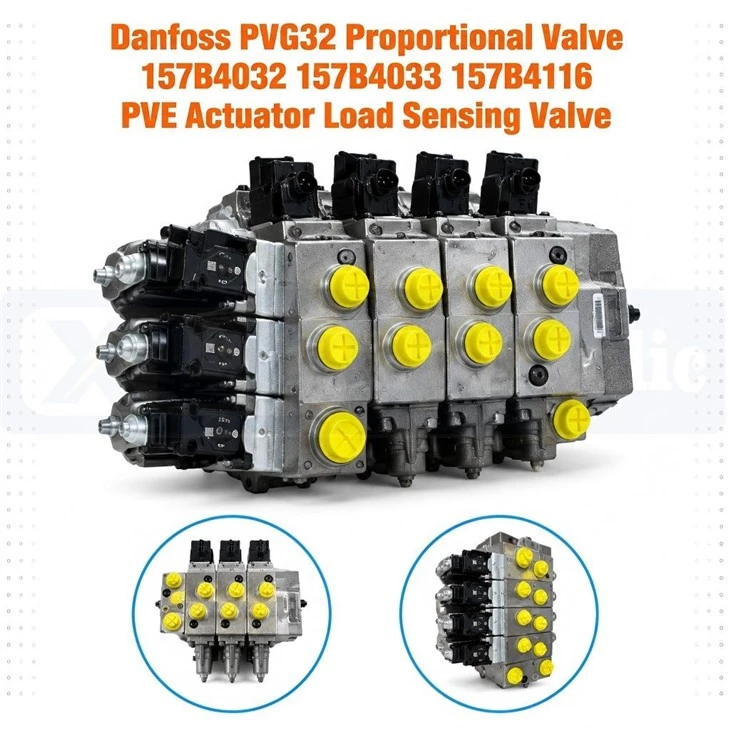
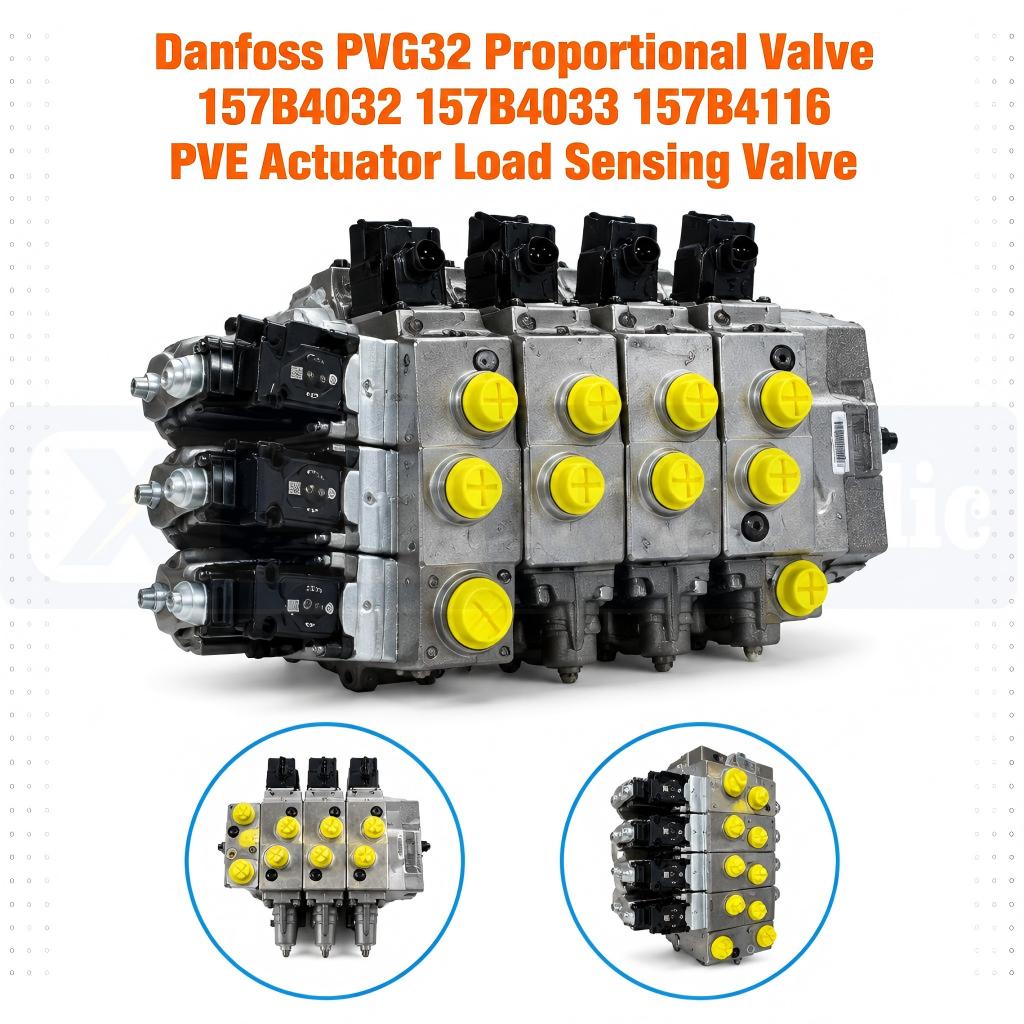
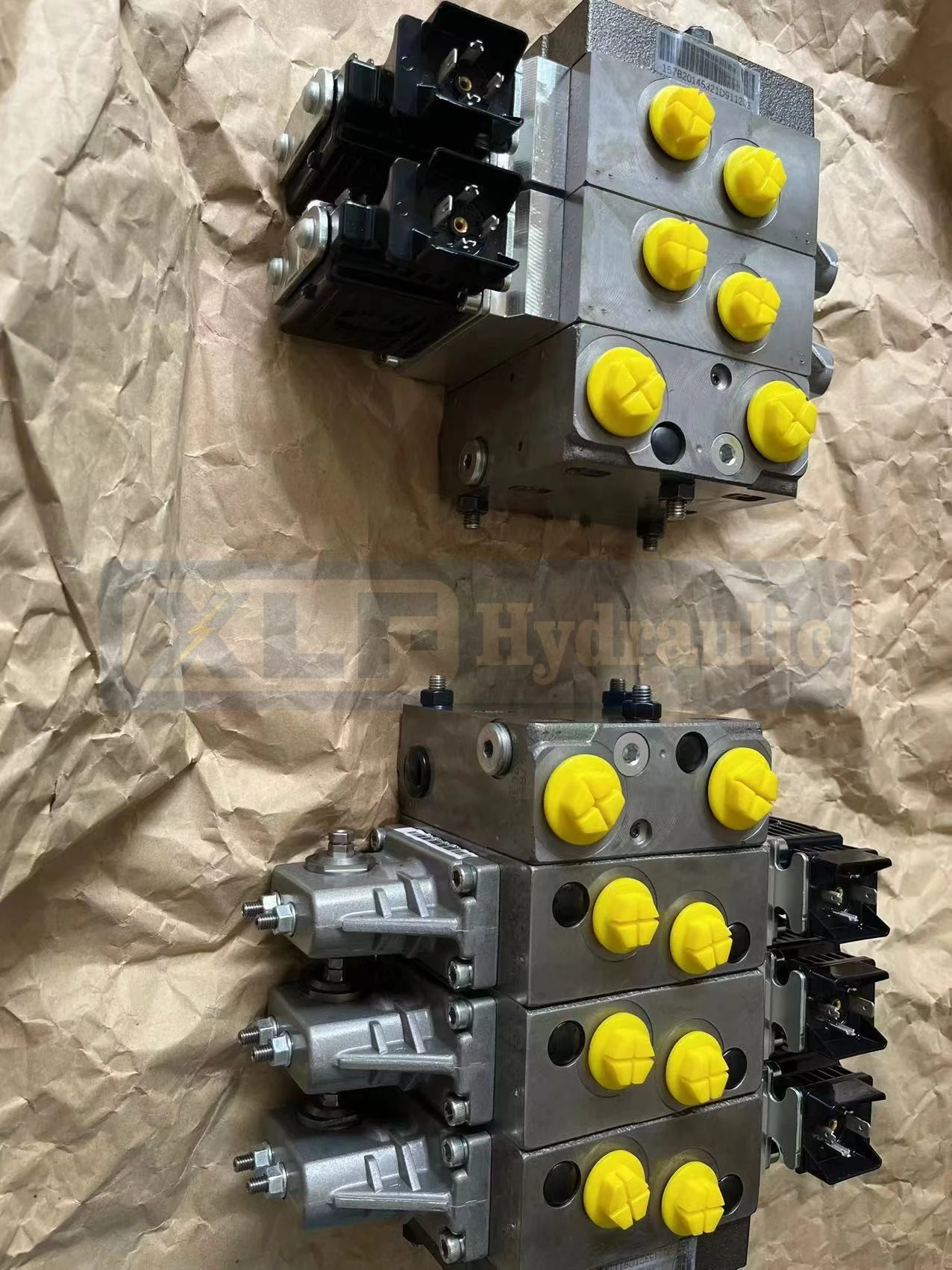
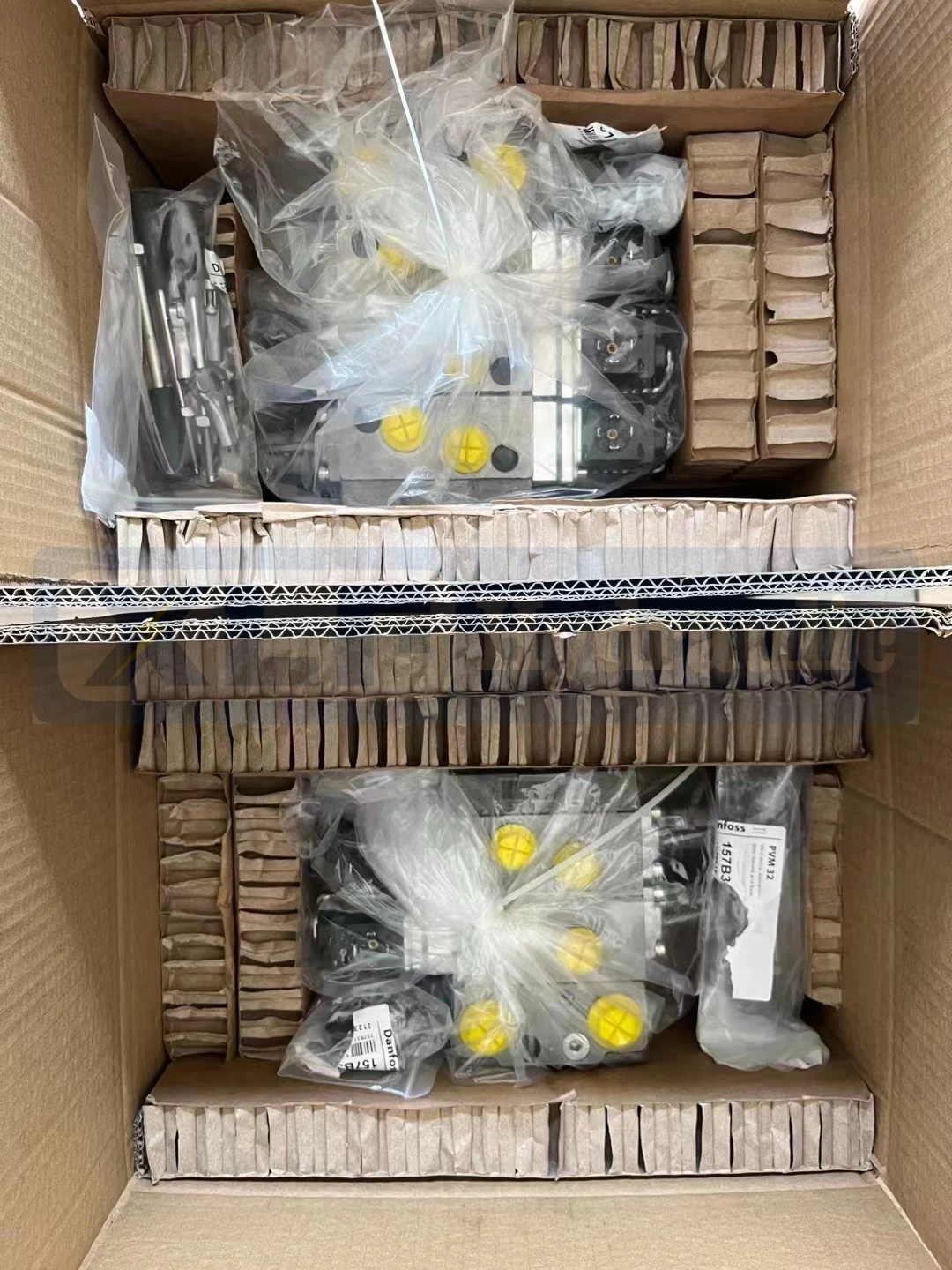
Danfoss PVG32 Proportional Valve 157B4032 157B4033 157B4116 PVE Actuator Load Sensing Valve
Wuhan Xinlaifu Hydraulic Equipment Co., Ltd. is one of the leading manufacturers and suppliers of danfoss pvg32 proportional valve 157b4032 157b4033 157b4116 pve actuator load sensing valve in China. With abundant experience, we warmly welcome you to buy high quality customized products at competitive price from our factory. Also, OEM&ODM service is available.
Specifications
| Parameter | 51D110-1 |
|---|---|
| Series | Series 51 / 51-1 (51D) |
| Displacement | 110 cc/rev (109.9 cc/rev) |
| Rated (Nominal) Pressure | 480 bar (7000 psi) |
| Maximum Pressure | 510 bar (7400 psi) |
| Minimum Input Pressure | 10 bar (145 psi) |
| Rated Speed | 2200–5600 rpm |
| Max Speed Range | up to 7000 rpm |
| Specific Torque (at max disp) | ≈ 0.35 N·m/bar (≈1067 lbf·in per 1000 psi) |
| Mounting Type | SAE 4-bolt flange (ISO 3019/1) / 2-bolt cartridge |
| Direction of Rotation | Bi-directional |
| Temperature Range | -40 °C to 115 °C |
| Typical Application | Hydrostatic transmission drives (replacement motor) |
Product Overview
If you are specifying or repairing the hydraulic control system on a compact excavator, crane, agricultural machine, or material handler, the valve group is where the machine's intelligence lives. It decides how much oil goes to which function, at what pressure, and in what proportion to the operator's command.
The Danfoss PVG32 is the most widely deployed member of the PVG proportional valve platform. It is a modular, load-sensing directional control valve that controls work port flow up to 125 L/min (33 US gal/min) and work port pressure up to 420 bar (6,090 psi) . Unlike a single-block valve, the PVG32 is assembled from individual modules - an inlet module, one or more work sections, and an end plate - tied together by stay bolts.
What makes the PVG32 different from a standard directional valve?
The PVG32 is a load-sensing (LS) proportional valve. Oil flow to each function is independent of the load pressure of that function, and independent of the load pressure of other functions operating simultaneously . In practice, this means an excavator operator can boom up and swing at the same time without one function slowing down because the other is under heavy load. The valve compensates automatically.
The valve is actuated by PVE electro-hydraulic actuators - proportional solenoids that convert an electrical command signal into a hydraulic pilot pressure, which moves the main spool. Different PVE variants offer different levels of control precision, from simple on/off to high-accuracy proportional control.
Which PVG32 configuration do you need? The answer depends on three questions:
What flow does your machine require? → PVG32 covers up to 125 L/min per work section
How many functions do you need to control? → up to 12 basic modules per valve group
What level of control precision does your application demand? → determines the PVE actuator type (PVEH, PVEM, PVEO, etc.)
Core Advantages
1. Load-Independent Flow Control – Simultaneous Functions Without Interference
The PVG32's defining characteristic is its load-sensing compensation. Each work section contains an integrated pressure compensator that maintains a constant pressure drop across the main spool, regardless of the load on that function or any other function in the circuit .
What this means for machine operation:
Smooth simultaneous movements - an operator can raise the boom while extending the arm and rotating the bucket. Each function receives the flow the operator commands, not the flow left over after the heaviest load takes its share.
Consistent speed under varying load - when a crane lifts a load, the speed does not drop as the load increases. The compensator adjusts to maintain the commanded flow rate.
Energy efficiency - the load-sensing system only produces the pressure required by the highest load in the system. When no function is demanding flow, the pump destrolces to low-pressure standby mode, consuming minimal power .
2. PVE Actuator Selection – Match the Control Precision to the Application
The PVG32's performance is determined as much by the PVE actuator as by the valve body itself. The PVE actuator converts the electrical command signal (from a joystick, PLC, or CAN bus) into a pilot pressure that positions the main spool.
The PVE Series 7 platform offers several variants, each with a different hysteresis - the amount by which the output lags behind the command signal:
| Actuator | Control Type | Hysteresis | Best For |
|---|---|---|---|
| PVEO | ON/OFF | - | Simple raise/lower functions, low-cost applications |
| PVEM | Ratiometric proportional | 25–35% | Medium-precision functions, cost-sensitive machines |
| PVEH | Proportional | 4–9% | High-precision control, active fault monitoring available |
| PVEA | Proportional | 2–6% | High-precision with direction indication |
| PVES | Proportional | 0–2% | Highest precision, safety-critical applications |
How to choose: If the function is a simple attachment that only needs to go in and out, PVEO is sufficient. If the function requires smooth, variable speed control - such as a crane hoist or an excavator boom - PVEH or PVEA is appropriate. For applications where the machine must hold a precise position or where safety standards require fault monitoring, PVES is the correct selection.
3. The 157B and 155G Part Numbers – What They Identify
The part numbers on this page are actuator and valve component identifiers within the Danfoss PVG system. Understanding what each number refers to is essential for ordering the correct replacement.
157B4032 - PVEH32, 11–32 VDC, Active Fault Monitoring
This is a PVEH proportional actuator for the PVG32 valve group. It operates on a wide voltage range of 11–32 VDC, which means the same actuator can be used on 12 V and 24 V systems. It features active fault monitoring - the actuator can detect and signal internal faults to the machine's control system. The current Danfoss replacement part number is 11166817 .
157B4033 - PVEH32, 11–32 VDC, Passive Fault Monitoring
Also a PVEH actuator for the PVG32, but with passive fault monitoring rather than active. Passive monitoring provides a simpler fault detection method, typically through the control system's own diagnostic routines rather than an internal monitoring circuit in the actuator itself .
157B4116 - PVEM32, 12 VDC
This is a PVEM ratiometric actuator for the PVG32, operating on 12 VDC (11–15 V range). The PVEM has a wider hysteresis (25–35%) than the PVEH, making it suitable for medium-precision functions where the cost of a high-precision actuator is not justified. The current replacement part number is 11166829 .
155G4093 - PVEH120, 11–32 VDC, for PVG120
This is a PVEH actuator for the PVG120 valve group, not the PVG32. It operates on 11–32 VDC and provides proportional actuation with passive fault monitoring. The PVEH120 is used on the larger PVG120 valve platform, which covers higher flow rates than the PVG32 .
Important ordering note: The 155G4093 is for the PVG120, not the PVG32. Confirm your valve group model before ordering an actuator - an actuator for the wrong valve group will not mount or function correctly.
4. Modular Construction – Build the Valve to Suit the Machine
The PVG32 is assembled from modules, allowing the valve group to be configured precisely for the machine's functions:
| Module Type | Function | Example Part Number |
|---|---|---|
| PVP Inlet Module | Connects valve to pump; contains pressure relief valve and pilot oil supply | 157B5100 (open center) |
| PVB Work Section | Controls flow to A/B ports for one function | 150B6100 (load sensing) |
| PVS End Plate | Closes the valve stack at the end opposite the inlet | 157B2020 |
| PVAS Stay Bolts | Tie the modules together | Part number varies by stack length |
Up to 12 basic modules can be assembled in a single PVG32 valve group . For machines requiring more than 12 functions, or for combining PVG32 with larger PVG modules (PVG48, PVG100), interface modules are available to connect different valve families into one stack .
5. Integrated Protection Features – Built-In Reliability
Every PVG32 work section includes protection features that would otherwise require external components:
Load holding check valve - prevents the load from dropping if pump pressure is lost (optional)
Shock and anti-cavitation valve (PVLP) - protects against pressure spikes and prevents cavitation during overrunning loads (optional)
Local LS relief valve - limits pressure in the load-sensing circuit for individual functions (optional)
Pressure gauge connection - allows on-site pressure verification without breaking into the circuit

Q1: How do I know which PVG32 actuator I need - PVEH, PVEM, or PVEO?
The choice depends on the precision required by the controlled function:
PVEO (ON/OFF): The function only needs to be fully on or fully off. Example: a locking pin or a simple attachment clamp.
PVEM (25–35% hysteresis): The function needs proportional control but the application tolerates moderate imprecision. Example: a conveyor drive or a fan motor.
PVEH (4–9% hysteresis): The function needs smooth, precise proportional control. Example: a crane hoist, an excavator boom, or a steering function.
PVES (0–2% hysteresis): The function is safety-critical or requires the highest precision. Example: a winch holding a suspended load or a position-critical actuator.
How to confirm your existing actuator: Read the part number from the actuator housing. The 157B4xxx numbers identify the actuator type: 157B4032 and 157B4033 are PVEH; 157B4116 is PVEM; 157B4216 is PVEO.
Q2: What is the difference between 157B4032 and 157B4033?
Both are PVEH32 actuators for the PVG32, operating on 11–32 VDC. The difference is the fault monitoring method:
157B4032: Active fault monitoring. The actuator has internal diagnostics that can signal a fault to the machine controller.
157B4033: Passive fault monitoring. Fault detection relies on the machine's control system monitoring the actuator's response, rather than an internal diagnostic circuit.
For machines with advanced control systems that can interpret actuator diagnostics, 157B4032 provides more immediate fault detection. For simpler machines, 157B4033 is sufficient. Both are direct replacements for their respective original applications.
Q3: Can I replace a 157B4032 with 157B4033, or vice versa?
Not without verifying the machine's control system requirements. Active and passive fault monitoring are not interchangeable in all control architectures. If the machine controller expects an active fault signal and receives none (because a passive actuator is installed), it may trigger a fault code or fail to detect a real actuator failure. Confirm the required monitoring type from the machine's electrical schematic or original parts documentation before substituting.
Q4: What is the maximum flow and pressure for the PVG32?
Rated work port flow: 125 L/min (33 US gal/min) without pressure compensator; 100 L/min (26.4 US gal/min) with pressure compensator
Maximum work port pressure: 420 bar (6,090 psi)
Maximum system pressure (P-port): 400 bar (5,800 psi)
Pilot oil pressure range: 20–25 bar (290–362 psi)
Q5: How many work sections can I assemble in one PVG32 valve group?
Up to 12 basic modules per PVG32 valve group . If the machine requires more than 12 functions, or if some functions require higher flow than the PVG32 can deliver, interface modules allow the PVG32 to be combined with larger PVG modules (PVG48, PVG100, PVG128, PVG256) in a single valve stack .
Q6: What pilot oil supply does the PVG32 require?
The PVG32's PVE actuators require a pilot oil supply of 20–25 bar (290–362 psi) . This pilot pressure is typically provided by the PVP inlet module, which includes an integrated pilot oil supply. If the machine uses a separate pilot circuit, the inlet module can be specified without internal pilot oil supply, and the pilot pressure is fed externally.
Q7: What hydraulic fluid cleanliness is required?
Danfoss specifies fluid cleanliness of ISO 4406 class 23/19/16 or better for the PVG32 with mechanical actuation, and cleaner fluid is recommended for PVE electro-hydraulic actuation . Contamination is the primary cause of spool sticking and actuator malfunction. Maintain filtration and fluid cleanliness according to the machine manufacturer's specification.
Q8: Do you provide test reports for PVG32 valves and actuators?
Yes. Each PVG32 valve assembly and PVE actuator undergoes factory testing before shipment. Test documentation can include spool function verification, proportional response data, and leakage checks. Test data and videos are available upon request.
Hot Tags: danfoss pvg32 proportional valve 157b4032 157b4033 157b4116 pve actuator load sensing valve, China danfoss pvg32 proportional valve 157b4032 157b4033 157b4116 pve actuator load sensing valve manufacturers, suppliers
Previous
No InformationYou Might Also Like


Send Inquiry