

Hey there! As a hydraulic pump supplier, I often get asked about how to calculate the flow rate of a hydraulic pump. It's a crucial aspect when it comes to selecting the right pump for your specific needs. So, let's dive right in and break down the process.
First off, what exactly is flow rate? Well, in simple terms, the flow rate of a hydraulic pump is the volume of fluid that the pump can move in a given amount of time. It's usually measured in units like gallons per minute (GPM) or liters per minute (LPM). Understanding the flow rate is essential because it determines how quickly a hydraulic system can perform its tasks, whether it's powering a hydraulic cylinder or running a hydraulic motor.
There are a few different ways to calculate the flow rate of a hydraulic pump. One of the most common methods is by using the pump's displacement and its speed. The displacement of a pump refers to the volume of fluid that the pump can displace with each revolution. It's typically measured in cubic inches per revolution (in³/rev) or cubic centimeters per revolution (cm³/rev).
To calculate the flow rate using displacement and speed, you can use the following formula:

Flow Rate (GPM) = Displacement (in³/rev) x Pump Speed (RPM) / 231
If you're using metric units, the formula becomes:
Flow Rate (LPM) = Displacement (cm³/rev) x Pump Speed (RPM) / 1000
Let's say you have a hydraulic pump with a displacement of 2 cubic inches per revolution and it's running at a speed of 1500 RPM. Using the first formula, the flow rate would be:
Flow Rate (GPM) = 2 in³/rev x 1500 RPM / 231 ≈ 13 GPM
Pretty straightforward, right? But keep in mind that this is a theoretical calculation. In real-world applications, there are other factors that can affect the actual flow rate, such as pump efficiency, leakage, and the viscosity of the hydraulic fluid.
Pump efficiency plays a big role in determining the actual flow rate. No pump is 100% efficient, which means that some of the power input to the pump is lost as heat or due to internal friction. The efficiency of a pump is usually expressed as a percentage. To account for pump efficiency, you can multiply the theoretical flow rate by the pump's efficiency factor.
For example, if the pump in our previous example has an efficiency of 85%, the actual flow rate would be:
Actual Flow Rate (GPM) = 13 GPM x 0.85 ≈ 11 GPM
Leakage is another factor that can reduce the flow rate. Over time, seals and other components in the pump can wear out, allowing fluid to leak past them. This leakage can have a significant impact on the pump's performance, especially in high-pressure applications. To minimize leakage, it's important to regularly maintain and inspect your hydraulic pumps.
The viscosity of the hydraulic fluid also affects the flow rate. Viscosity refers to the thickness or resistance to flow of the fluid. If the fluid is too thick, it can cause the pump to work harder and reduce the flow rate. On the other hand, if the fluid is too thin, it can lead to increased leakage and reduced lubrication. It's important to use the right type of hydraulic fluid with the appropriate viscosity for your pump and application.
Now, let's talk about some of the products we offer as a hydraulic pump supplier. We have a wide range of high-quality hydraulic pumps and parts to meet your needs. For example, check out our 11173097 Aftermarket Volvo Replacement Pumps & Fan Motor & Parts | High-Efficiency & Precise-Fit. These pumps are designed to provide high efficiency and a precise fit, making them a great choice for Volvo equipment.
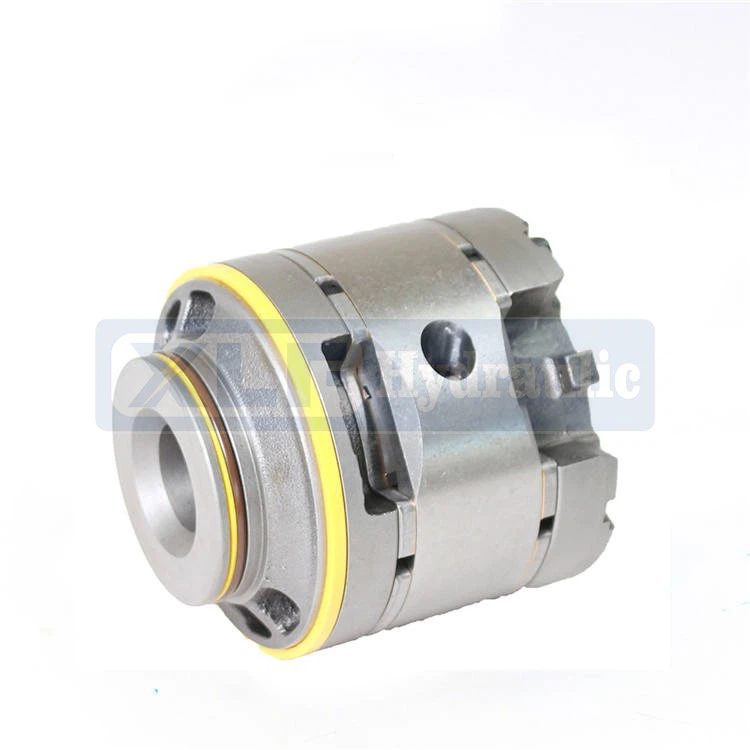
We also have the CAT VQ Series Cartridge For Variable Delivery Hydraulic Pump Cartridge Kits. These cartridges are perfect for variable delivery hydraulic pumps, allowing you to adjust the flow rate as needed for different applications.
And if you're looking for a hydraulic pump for your Volvo excavator, our Volvo 11713293 Excavator Hydraulic Pump - Fits EC210B/EC240B/EC290B, High Efficiency & OEM/ODM Available is a great option. It's designed to fit specific Volvo excavator models and offers high efficiency and the option for OEM/ODM customization.
In conclusion, calculating the flow rate of a hydraulic pump is an important step in selecting the right pump for your application. By understanding the basic principles and taking into account factors like pump efficiency, leakage, and fluid viscosity, you can ensure that your hydraulic system operates at its best. If you have any questions or need help selecting the right hydraulic pump or parts, don't hesitate to reach out. We're here to assist you with all your hydraulic pump needs and help you find the perfect solution for your project.
References
- Fluid Power Handbook
- Hydraulic Pump Manufacturer's Manuals


