

In the realm of fluid power systems, axial displacement pumps play a pivotal role. As a dedicated supplier of axial displacement pumps, I've witnessed firsthand the diverse applications and the critical role that the speed of these pumps plays in determining their output. In this blog, I'll delve into the intricate relationship between the speed of an axial displacement pump and its output, offering insights that can help you make informed decisions for your specific needs.
Understanding Axial Displacement Pumps
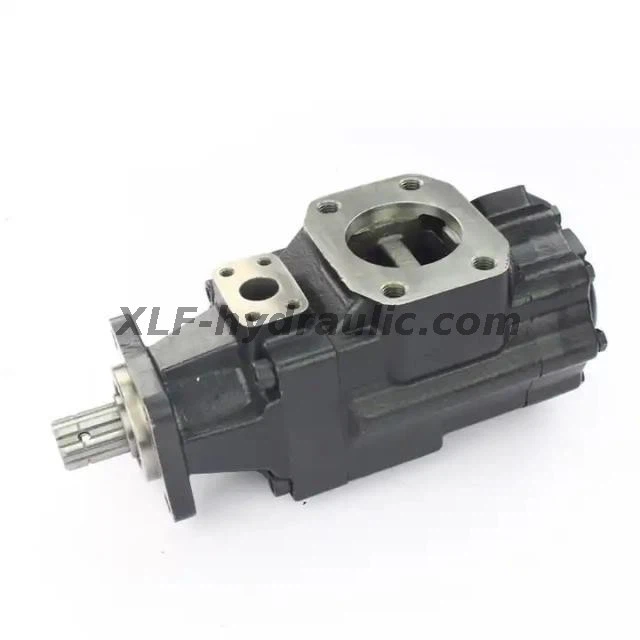
Axial displacement pumps are a type of positive displacement pump that uses reciprocating pistons in a cylinder block to transfer fluid. These pumps are known for their high efficiency, reliability, and ability to generate high pressures. They are widely used in various industries, including construction, agriculture, and manufacturing, for applications such as hydraulic systems in heavy machinery, power steering in vehicles, and fluid transfer in industrial processes.
The Basics of Pump Speed and Output
The output of an axial displacement pump is primarily determined by two factors: the displacement volume of the pump and its rotational speed. The displacement volume refers to the amount of fluid that the pump can displace with each revolution. The rotational speed, on the other hand, is the number of revolutions per minute (RPM) at which the pump operates.
The theoretical output flow rate (Q) of an axial displacement pump can be calculated using the following formula:

[ Q = V \times n ]
Where:
- ( Q ) is the output flow rate (in liters per minute or gallons per minute)
- ( V ) is the displacement volume per revolution (in cubic centimeters or cubic inches)
- ( n ) is the rotational speed (in RPM)
From this formula, it's clear that the output flow rate is directly proportional to the rotational speed of the pump. As the speed increases, the output flow rate also increases, assuming the displacement volume remains constant.
Effects of Pump Speed on Output
Flow Rate
As mentioned earlier, the most direct effect of pump speed on output is on the flow rate. Increasing the speed of the pump results in a higher flow rate, which can be beneficial in applications where a large volume of fluid needs to be transferred quickly. For example, in a hydraulic system for a large construction machine, a higher flow rate can enable faster operation of hydraulic cylinders, leading to increased productivity.
However, it's important to note that there are practical limits to how much the speed can be increased. At very high speeds, the pump may experience cavitation, which occurs when the pressure in the pump drops below the vapor pressure of the fluid, causing the formation of vapor bubbles. Cavitation can damage the pump components, reduce efficiency, and generate noise.
Pressure
The speed of the pump can also have an impact on the pressure output. In general, as the speed increases, the pressure that the pump can generate also increases. This is because the faster the pistons move, the more force they can exert on the fluid, resulting in higher pressure.
However, the relationship between speed and pressure is not linear. At higher speeds, the internal losses in the pump, such as friction and leakage, also increase. These losses can offset the increase in pressure generation, and in some cases, the pressure output may start to decrease if the speed is too high.
Efficiency
Pump efficiency is another important factor affected by speed. Efficiency is defined as the ratio of the useful power output of the pump to the power input. At low speeds, the pump may not be operating at its optimal efficiency due to factors such as internal leakage and friction. As the speed increases, the efficiency typically improves up to a certain point.
Beyond this optimal speed, the efficiency starts to decline. This is because the increased internal losses at high speeds consume more power, reducing the overall efficiency of the pump. Therefore, it's crucial to operate the pump at the speed that maximizes efficiency to minimize energy consumption and operating costs.
Real - World Examples
Let's take a look at some real - world examples of axial displacement pumps and how speed affects their output.
The CAT VQ Serie Hydraulic Variable Delivery Pumps for Wheeled Tractor are designed for use in wheeled tractors. These pumps can be adjusted to vary the displacement volume, which allows for flexibility in different operating conditions. By changing the speed of the pump, operators can control the flow rate and pressure output to match the requirements of the tractor's hydraulic system, such as lifting heavy loads or operating attachments.
The Denison Series T6GCC Hydraulic Radial Cylinder Pump for Trucks is another example. In truck applications, the pump needs to provide a reliable and consistent flow of hydraulic fluid for functions like power steering and braking. Adjusting the speed of the pump can optimize the performance of these systems, ensuring smooth and safe operation of the vehicle.
The Atos PFED Series Hydraulic Single Reciprocating Pump Piston For Trucks is designed for specific truck - related hydraulic applications. The speed of this pump can be carefully controlled to achieve the desired output flow and pressure, which is crucial for the proper functioning of truck hydraulic systems.
Selecting the Right Pump Speed
When selecting the appropriate speed for an axial displacement pump, several factors need to be considered:
- Application Requirements: The specific requirements of the application, such as the required flow rate and pressure, should be the primary consideration. For example, if a fast - acting hydraulic system is needed, a higher speed may be required, but the potential for cavitation and other issues must be taken into account.
- Pump Design and Specifications: Each pump has its own design limits and optimal operating range. The manufacturer's specifications should be carefully reviewed to ensure that the pump is operated within these limits.
- Fluid Properties: The properties of the fluid being pumped, such as viscosity and temperature, can also affect the pump's performance at different speeds. For example, a more viscous fluid may require a lower speed to avoid excessive power consumption and cavitation.
Conclusion
In conclusion, the speed of an axial displacement pump has a significant impact on its output, including flow rate, pressure, and efficiency. As a supplier of axial displacement pumps, I understand the importance of selecting the right pump and operating it at the optimal speed to meet the specific needs of each application.
Whether you're in the construction, agriculture, or manufacturing industry, choosing the appropriate pump speed can lead to improved performance, reduced operating costs, and increased reliability. If you're looking for high - quality axial displacement pumps or need advice on pump selection and operation, I encourage you to reach out to me for a detailed discussion. We can work together to find the best solution for your fluid power needs.
References
- "Hydraulic Pumps and Motors: Fundamentals, Selection, and Application" by Heinz P. Bloch
- "Fluid Power Engineering" by John F. Watton


